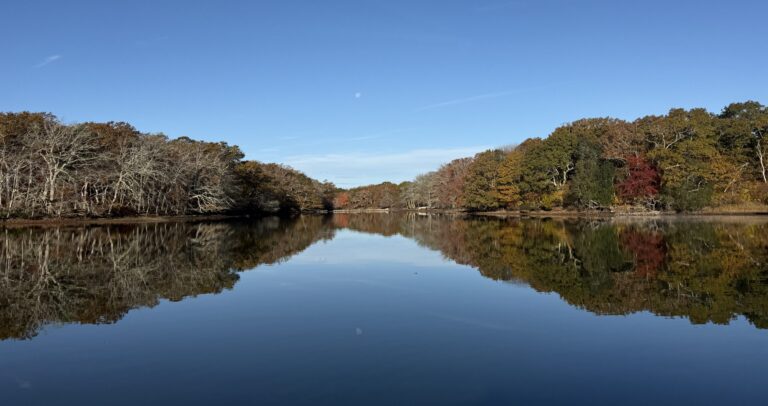
Edgartown Great Pond This Fall
Learn more about the October 2026 cut, a new cut study that measures the impacts of cuts on nitrogen flushing, and October eelgrass monitoring!
2026 October Cut
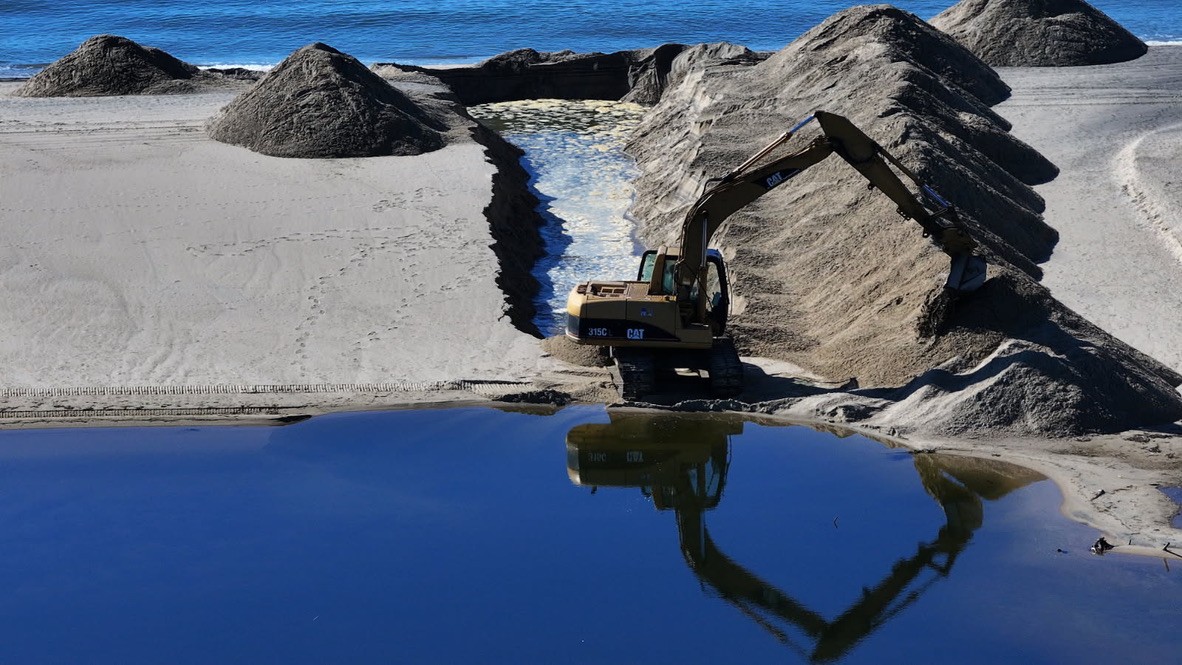
The Town of Edgartown opened Edgartown Great Pond (EGP) to the Atlantic Ocean on the morning of Wednesday, October 7th, marking a highly anticipated moment for the community and Great Pond Foundation (GPF) staff. Using an excavator, town crews breached the barrier beach, carving a narrow channel connecting the pond with the open ocean. Immediately following the cut, pond water surges towards the sea through the channel, steadily lowering the pond’s water elevation. As this strong outgoing flow continues, the channel naturally widens and deepens, allowing even greater volumes of water to pass through.
The pond then transitions into the tidal phase. Regular tidal exchange between the ocean and the pond is established, allowing cool, clean, salty ocean water to flow in with each incoming tide, while nutrient‑rich pond water is flushed out to sea. This exchange is a key process in restoring and maintaining overall water quality within the pond.
Edgartown Great Pond Cut October 2026. Video by Cornelius Sullivan.
Cut Phases and Pond Elevation
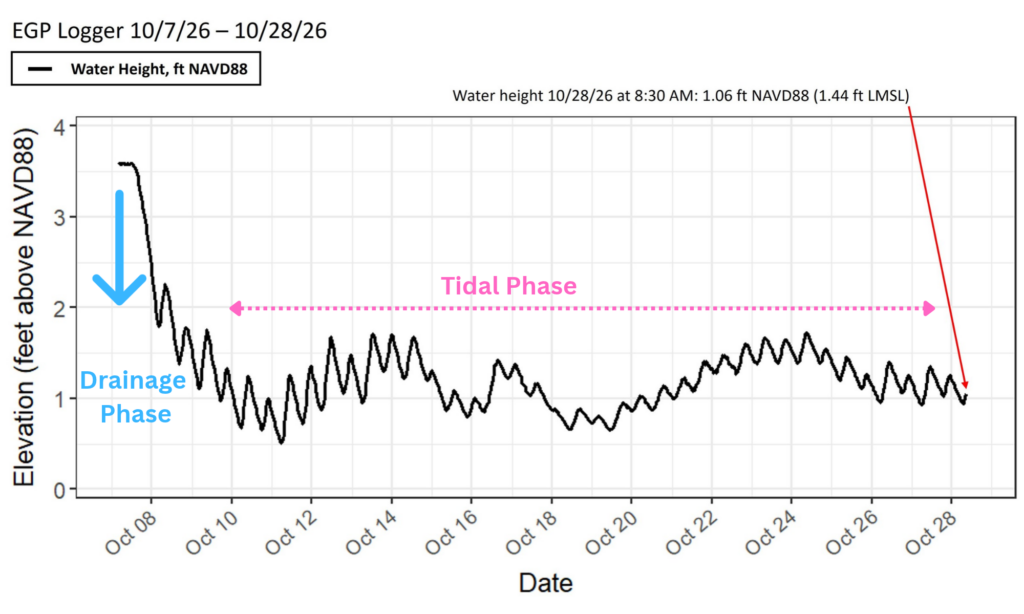
Leading up to the cut, EGP was just shy of 4 feet above local mean sea level (LMSL). There are two phases to an opening or “cut”: 1) Drainage and 2) Tidal Exchange. The drainage phase happens in the beginning when the pond elevation drops, and water flows out of the pond in the ocean. The tidal exchange phase then follows after the 24-hour drainage period. This is when the pond and the ocean exchange water and organisms. The latest elevation of the pond as of 10/28/26 was at 1.44 ft LMSL.
Edgartown Great Pond Cut Study
During this October pond opening the GPF science team in collaboration with the Marine Biological Laboratory in Woods Hole, conducted a study to find out how nitrogen moves between EGP and the ocean. In particular, to create a model of the volume of water exchange, and the amount of nitrogen flushed out of the pond during a cut.
Why This Study Matters
Cuts are one form of nitrogen mitigation making it valuable to know how much nitrogen is removed when cuts are effective. Knowing how much cuts can be relied on will make it clear what other strategies are necessary and at what scale.
Sampling Protocol
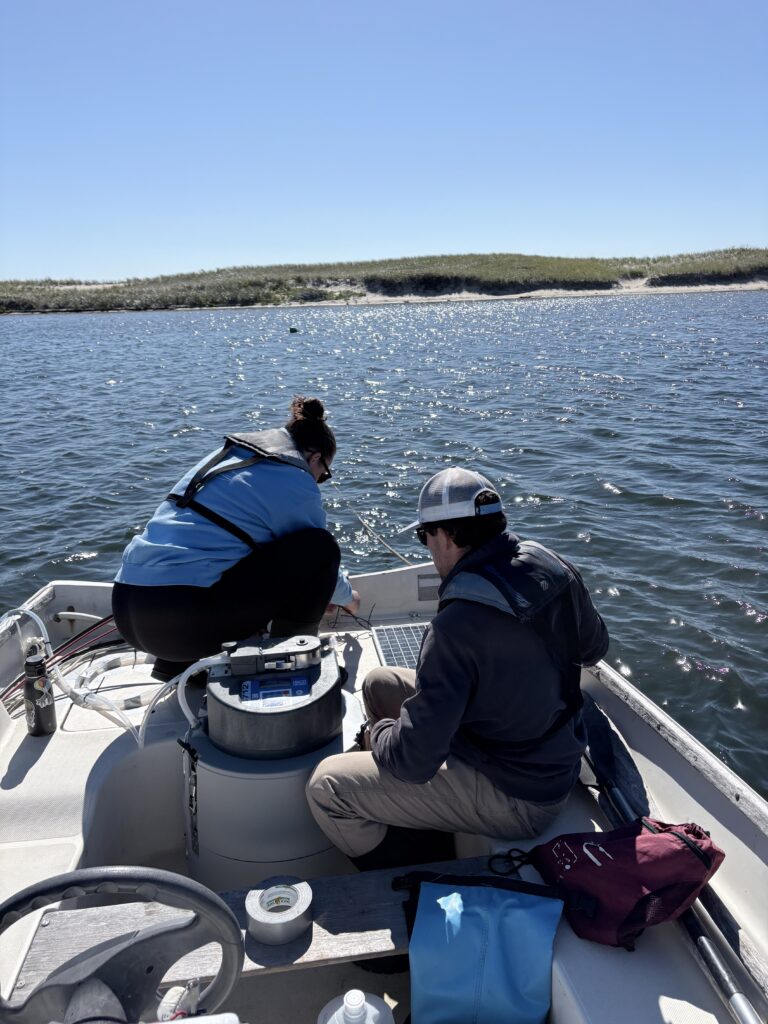
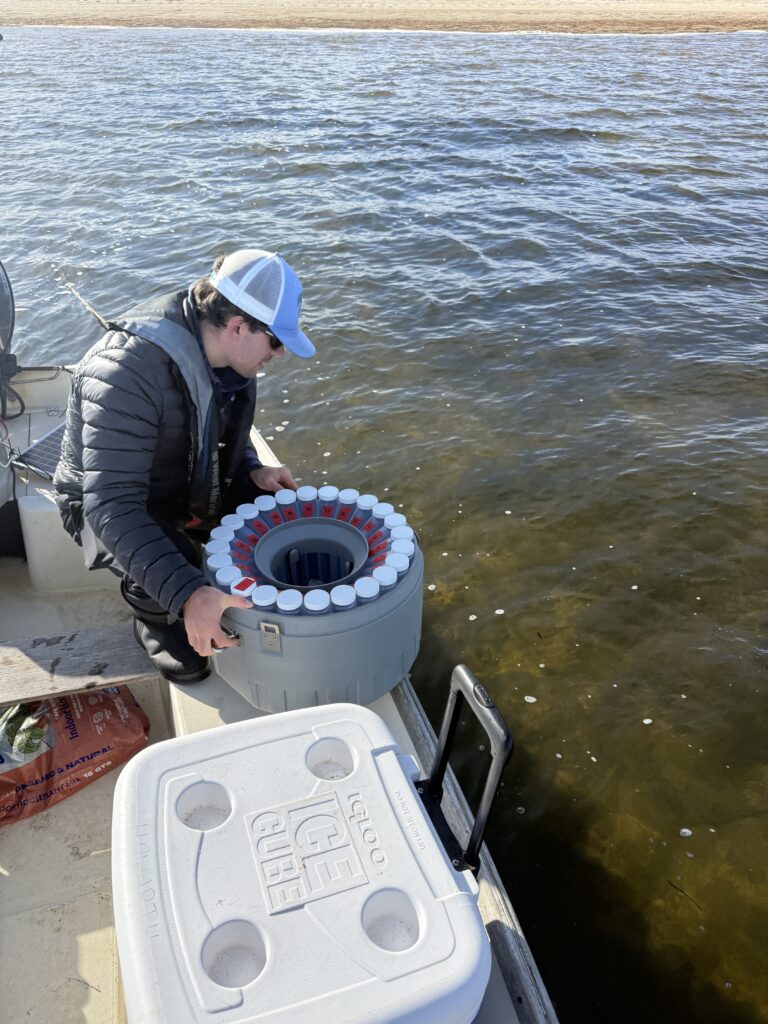
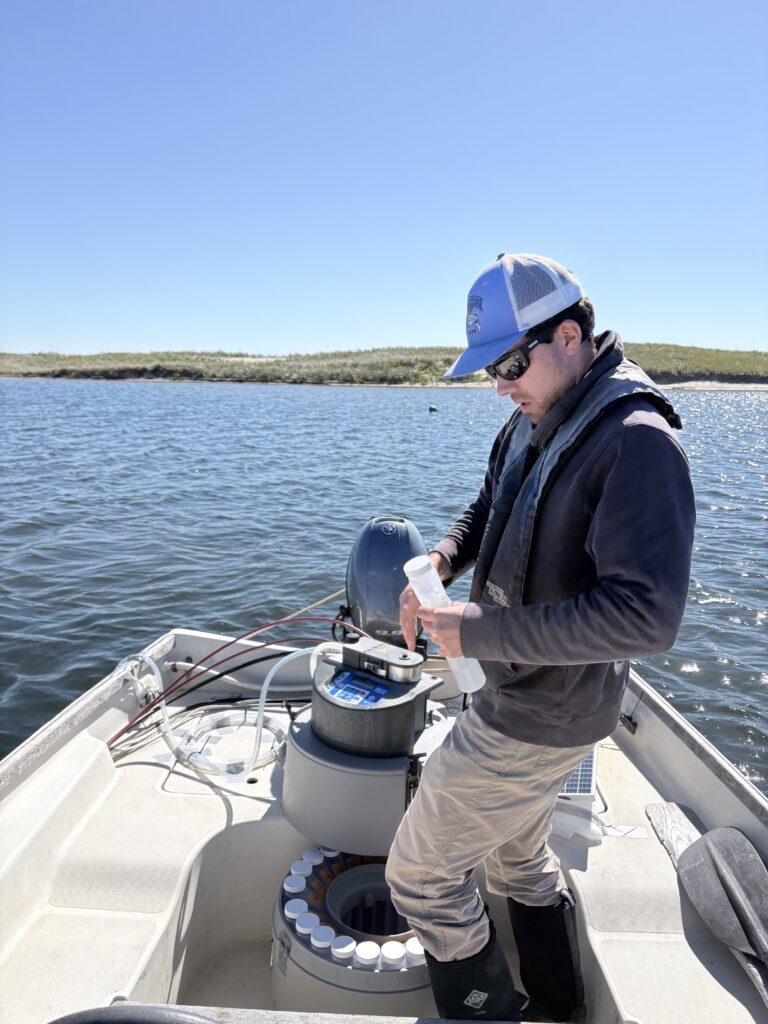
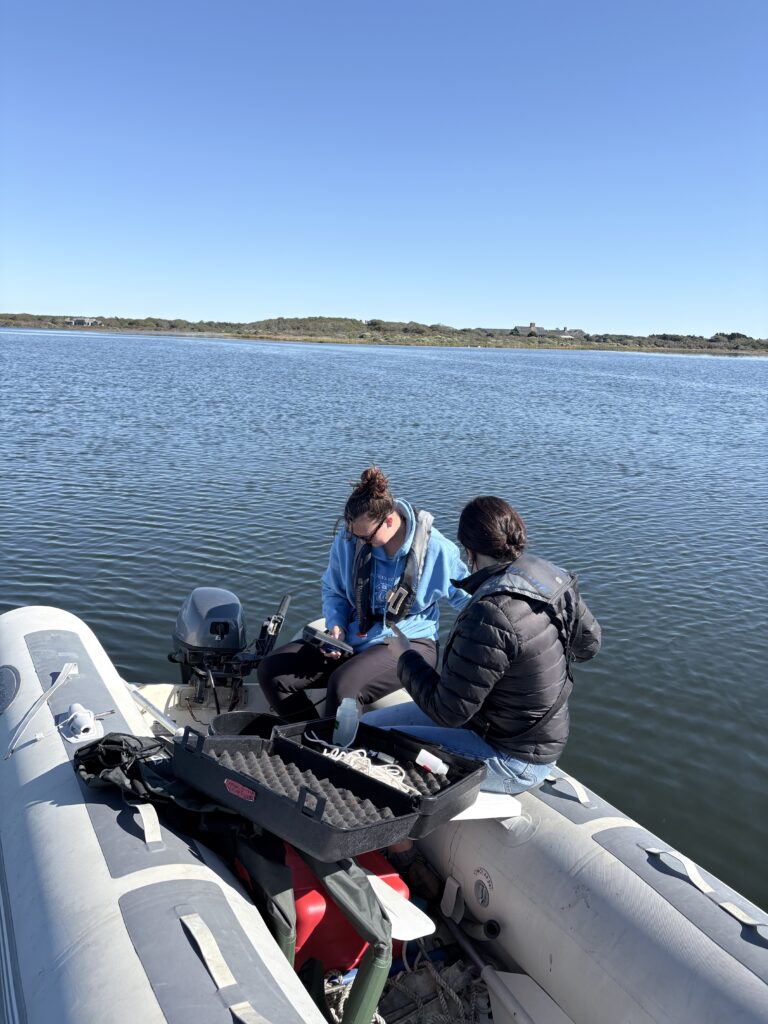
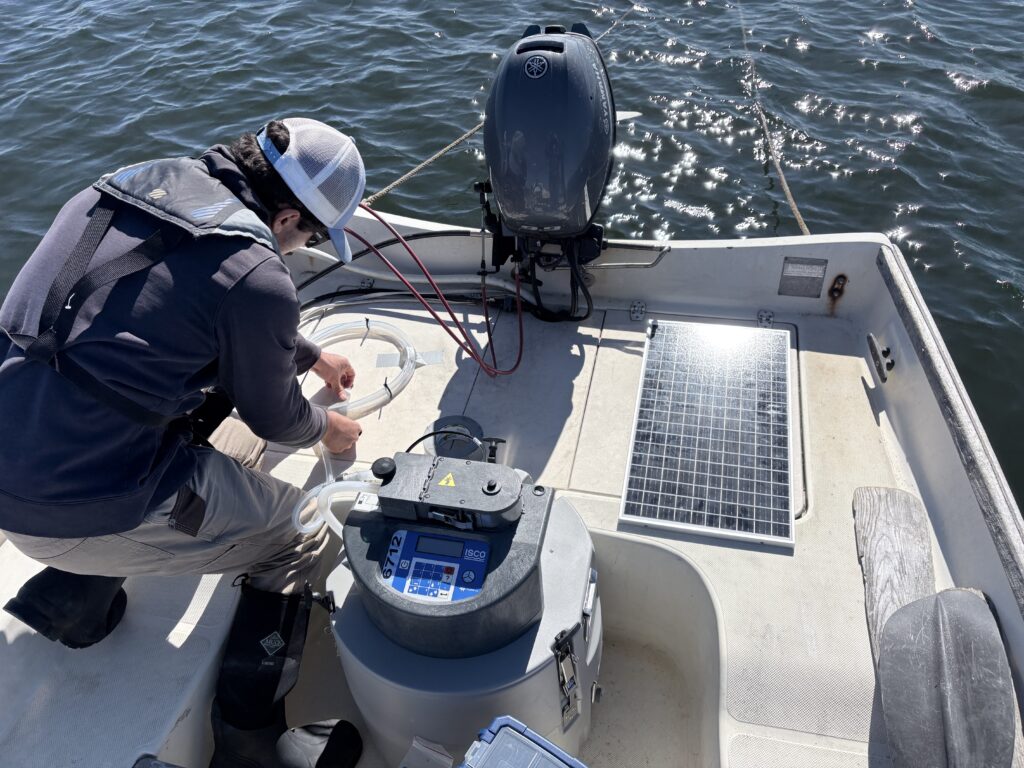
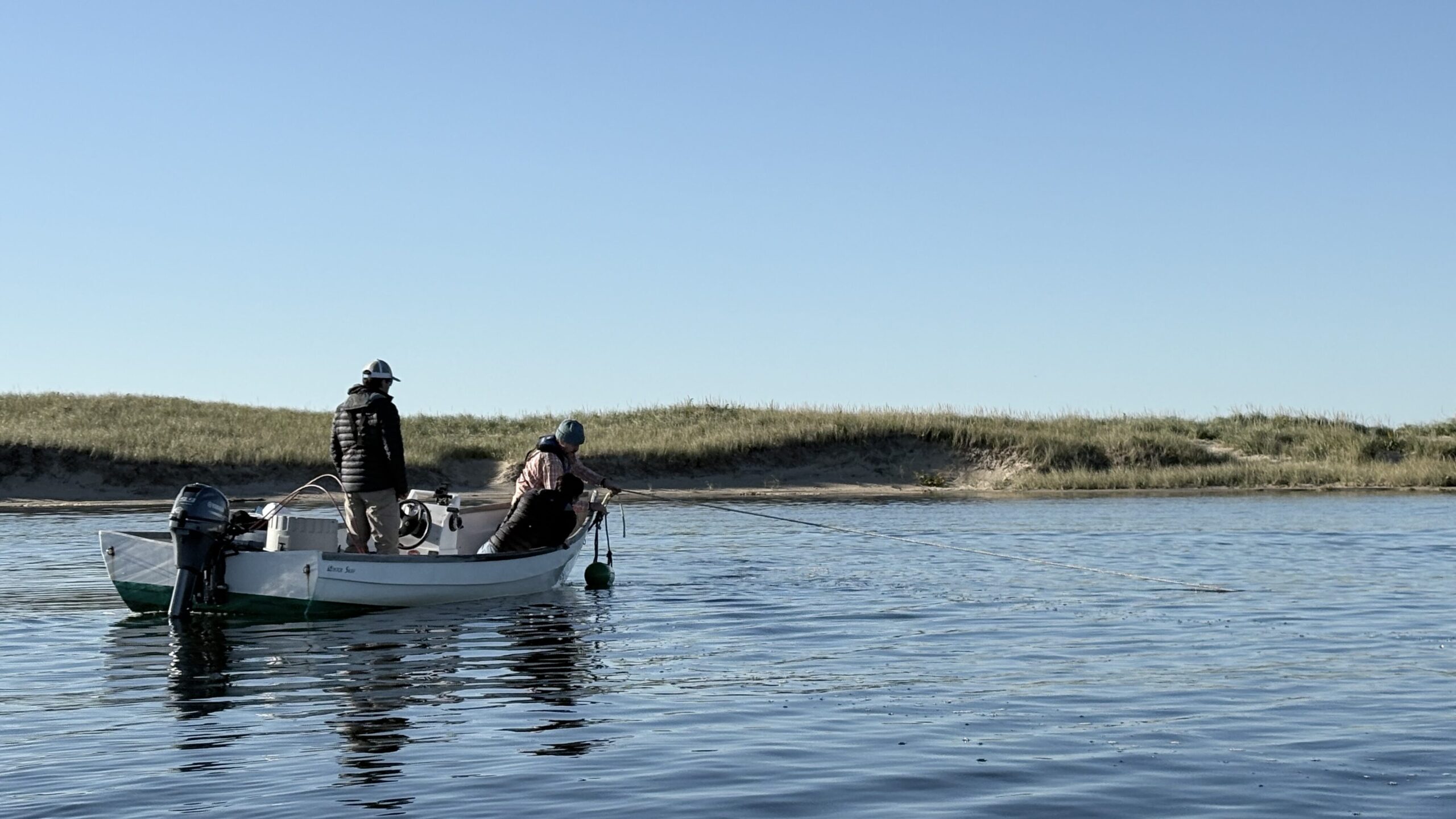
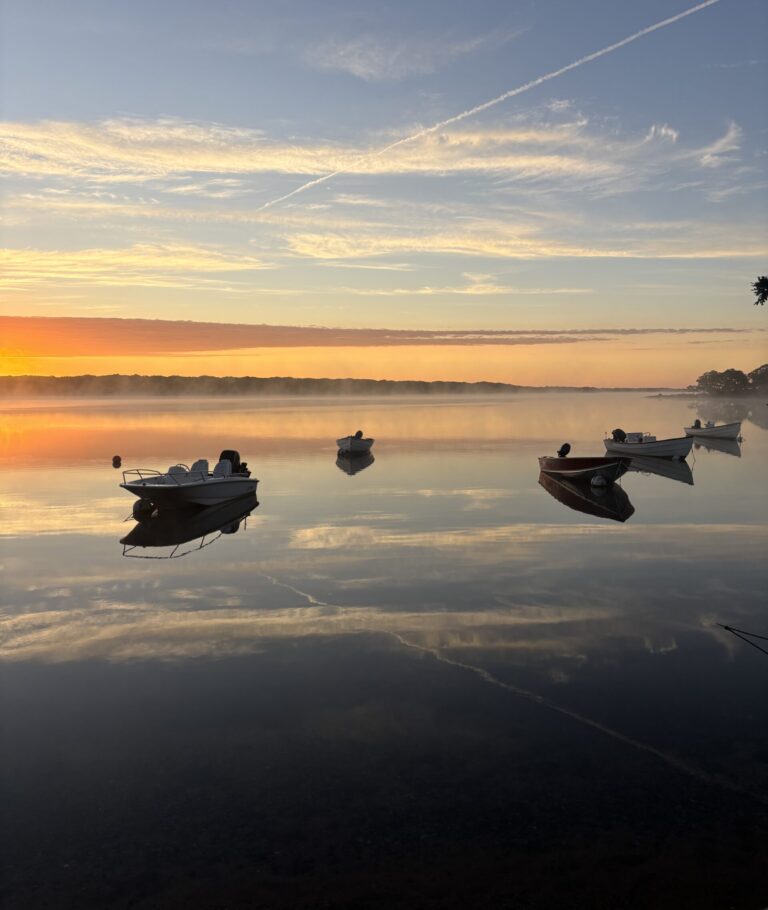
Starting the moment the beach was breached an automated sampler collected pond water every two hours for the first 4 days of the opening. This sampler was secured on a boat in the pond just east of the cut. Every day the team went out to check the sampler and swap empty bottles for collected samples.
After the 4th day, our team collected 2 samples each day at both high and low tide for a week along with ocean samples as a comparison. All samples are now being processed and analyzed at the Marine Biological Laboratory for nitrogen concentrations.
Fall Eelgrass Monitoring
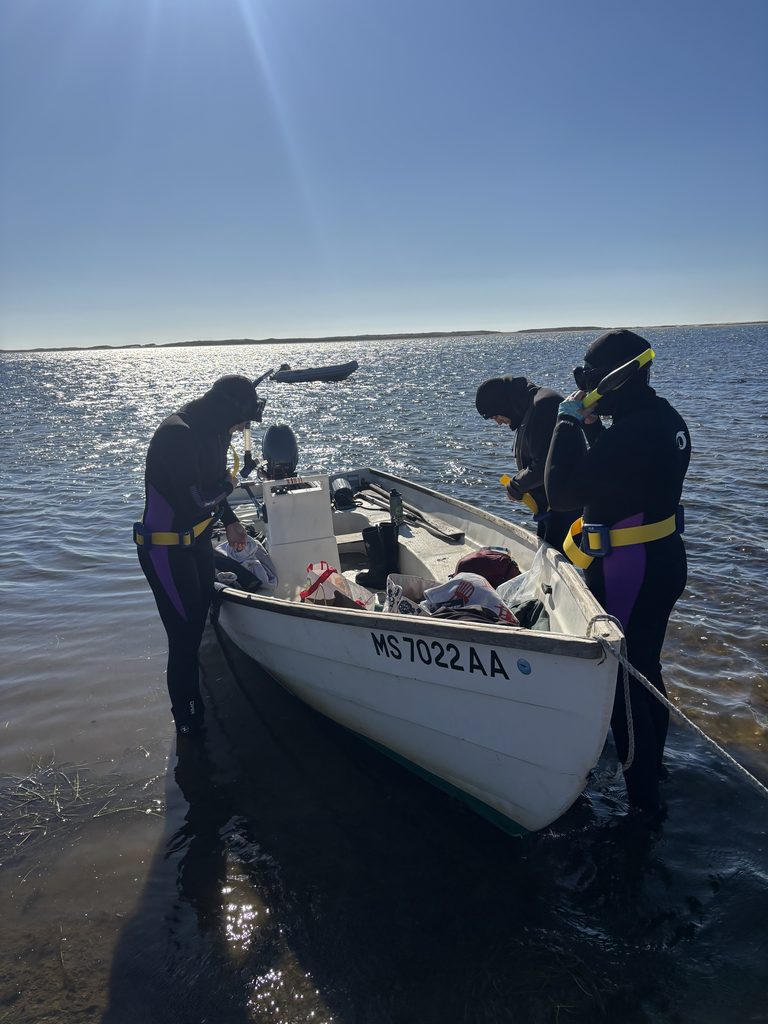
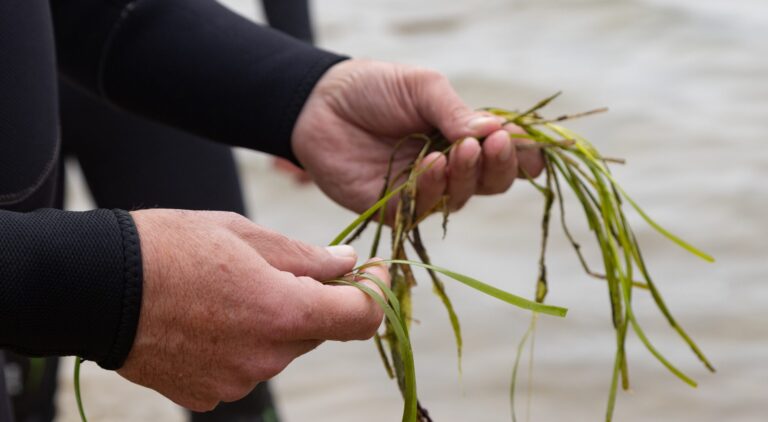
This fall marked our final eelgrass monitoring session of the year! In collaboration with SeagrassNet, GPF conducts eelgrass monitoring in Edgartown Great Pond three times a year (spring, summer, and fall) to track the health and growth of this important underwater meadow.
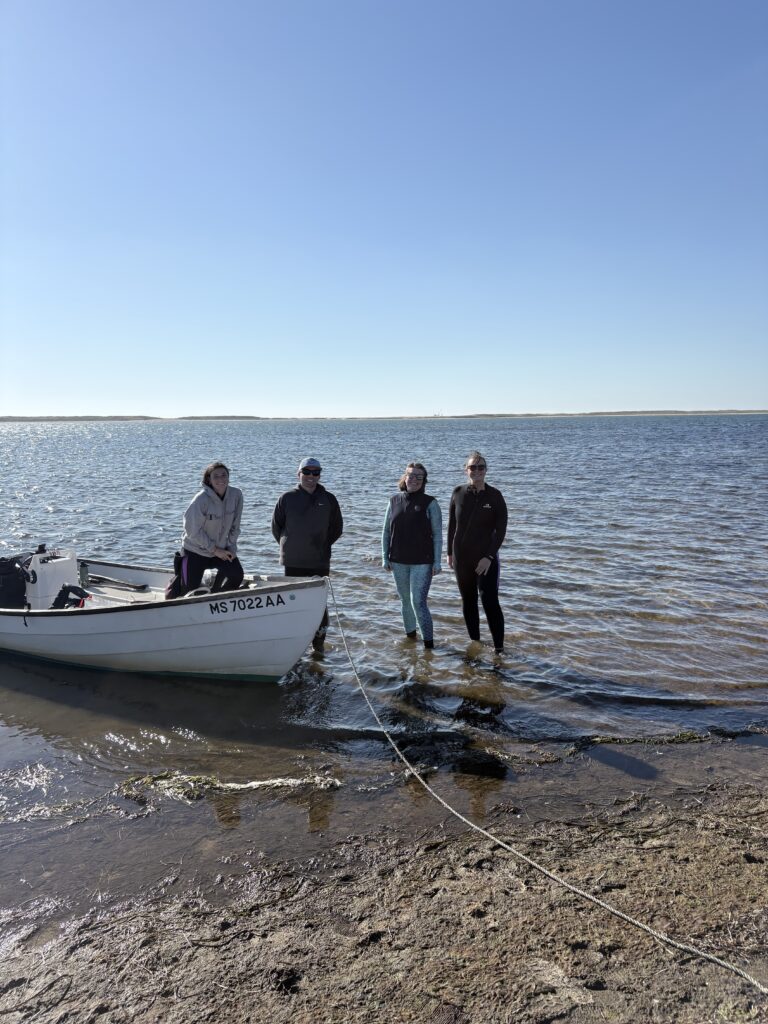
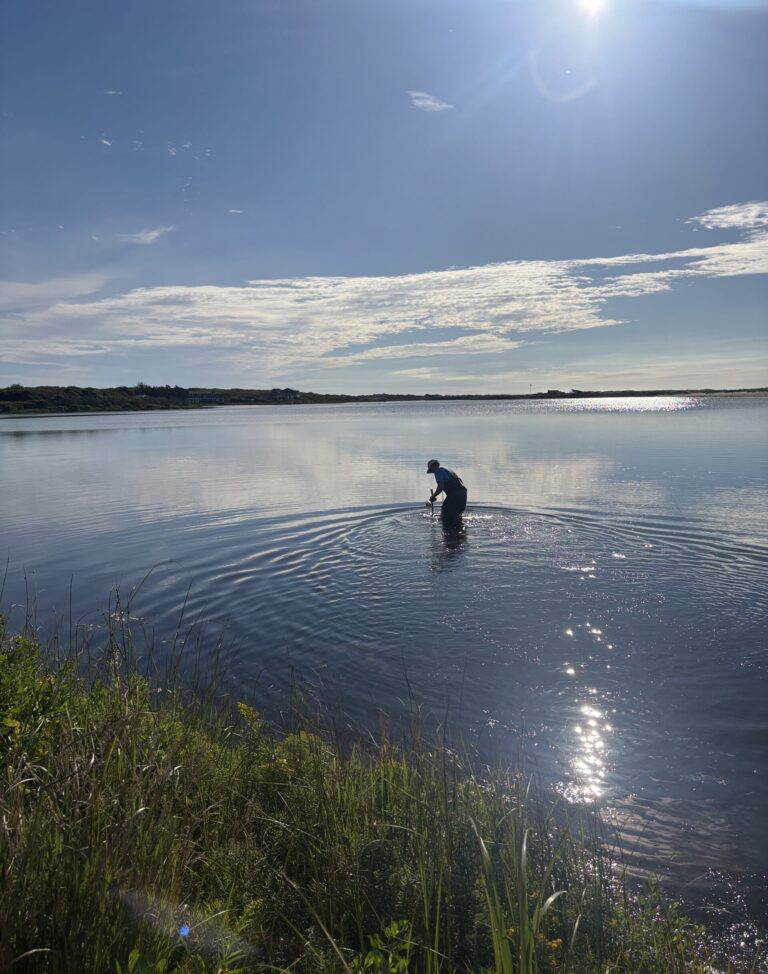
This October, we bundled up and headed out onto the pond to complete our final round of monitoring. Along our three 50-meter transects, we measured seagrass density, canopy height, and percent cover. These measurements help us track seasonal changes in the meadow and monitor its overall health over time.
Even as the temperatures cool, the eelgrass meadow continues to look vibrant and healthy! We’re looking forward to continuing this work next spring and building on another year of monitoring data.
Scrollable
Fall on Edgartown Great Pond
2026 Summer Highlights
Summer Water Quality Monitoring Stats
Pond-Smart Checklist
2026 Eelgrass Monitoring in EGP