
Water Quality Monitoring
Water Quality Parameters
Dissolved Oxygen
The amount of oxygen dissolved in the water, measured in milligrams per liter (mg/L). Organisms require adequate oxygen concentrations for their metabolism and will become stressed if DO becomes depleted. The management goal for a healthy pond is 6 mg/L. DO levels below 4 mg/L are when organisms begin to suffer from lack of oxygen, and when DO drops below 2 mg/L the water becomes hypoxic, where oxygen deficiencies can be fatal. The amount of oxygen that can physically dissolve in water is dependent on temperature, salinity and pressure.

Salinity
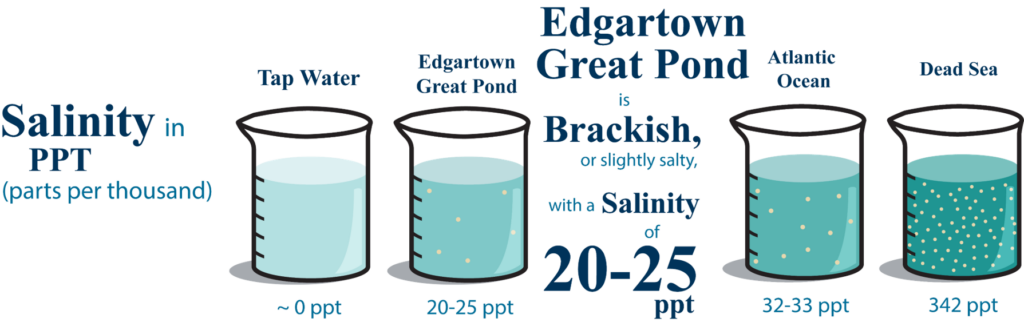
The amount of salts dissolved in the water, measured in parts per thousand (ppt). Ocean water has a salinity of 32-35 ppt, while freshwater is 0 ppt. Most organisms are adapted to live in either freshwater or saltwater and cannot tolerate both. The GPF management threshold is 15 ppt, which is the lowest salinity in which eelgrass can survive.
pH
A measurement of how acidic or basic a solution is. Neutral pH is 7. pH of coastal waters often range from 6.5-8.5, which is the management goal. pH will often become acidic if there is excessive decaying organic matter in the water or sediment.
Turbidity
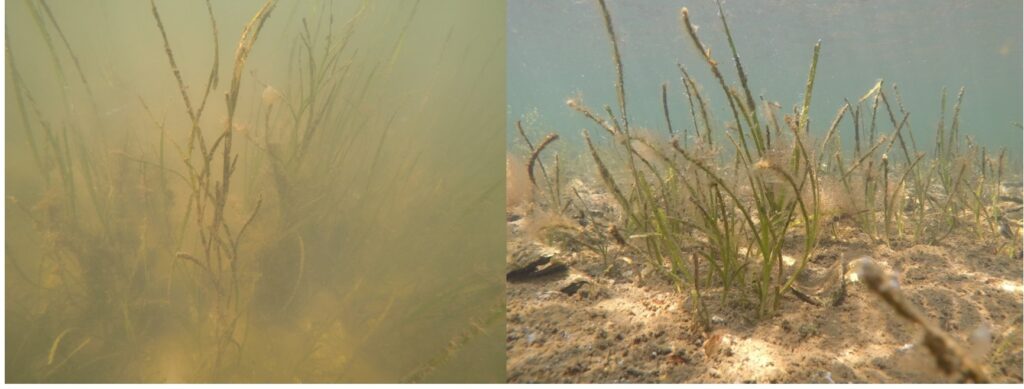
A measure how many particles are dissolved in the water, which affects how much light is transmitted through the water column. Water with low turbidity is clear and you can often see the bottom, while water with high turbidity appears murky. High turbidity is detrimental to submerged aquatic vegetation, as less sunlight can penetrate the water.
Chlorophyll
A pigment plants use for photosynthesis, measured in micrograms per liter (µg/L). Monitoring chlorophyll concentrations can tell you if excessive plant growth is occurring, such as an algal bloom. The management goal for chlorophyll is 3-10 µg/L.
Nutrient Concentrations
Dissolved concentrations of nitrate, phosphate, silica, and ammonium, measured in milligram/liter (mg/L). Living organisms need these nutrients to survive, however they are often elevated in coastal waters. Elevated nutrient levels usually come from fertilizer and septic systems, and lead to excessive plant growth and deteriorated water quality, a process called eutrophication. In EGP, nitrate and ammonium have been elevated in the past and are monitored closely, with a management goal of keeping total nitrogen (TN) to 0.5 mg/L of nitrogen or less.
What is a healthy pond?
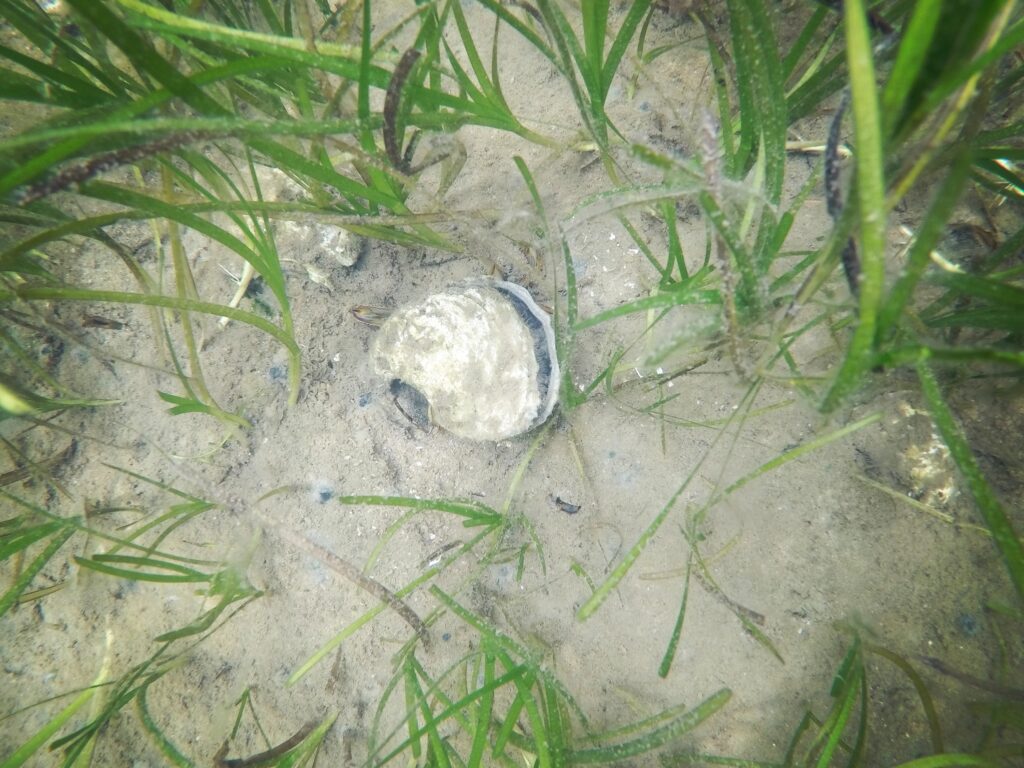
Healthy coastal ponds have clean water, clean sediment, and a high diversity of plants and animals. Eelgrass (Zostera marina) is often used as an indicator species, as it can only survive in ecosystems with excellent water quality. GPF uses these water quality guidelines from the Massachusetts Estuaries Project (MEP) and EPA:
➤Dissolved O2 ≥ 6.0 mg/L
➤pH 6.5-8.5
➤Temperature ≤ 85°F
➤Transparency 1.5 – 3.0 m (or bottom, if <3 m)
➤Total nitrogen 0.28 – 0.61 mg N/L
➤Chlorophyll-a pigments 3-10 μg/L
Monitoring the Coastal Ponds
Great Pond Foundation conducts year-round water quality monitoring across Martha’s Vineyard’s coastal ponds to track ecosystem health, identify environmental changes, and provide scientific data that supports conservation and management efforts.
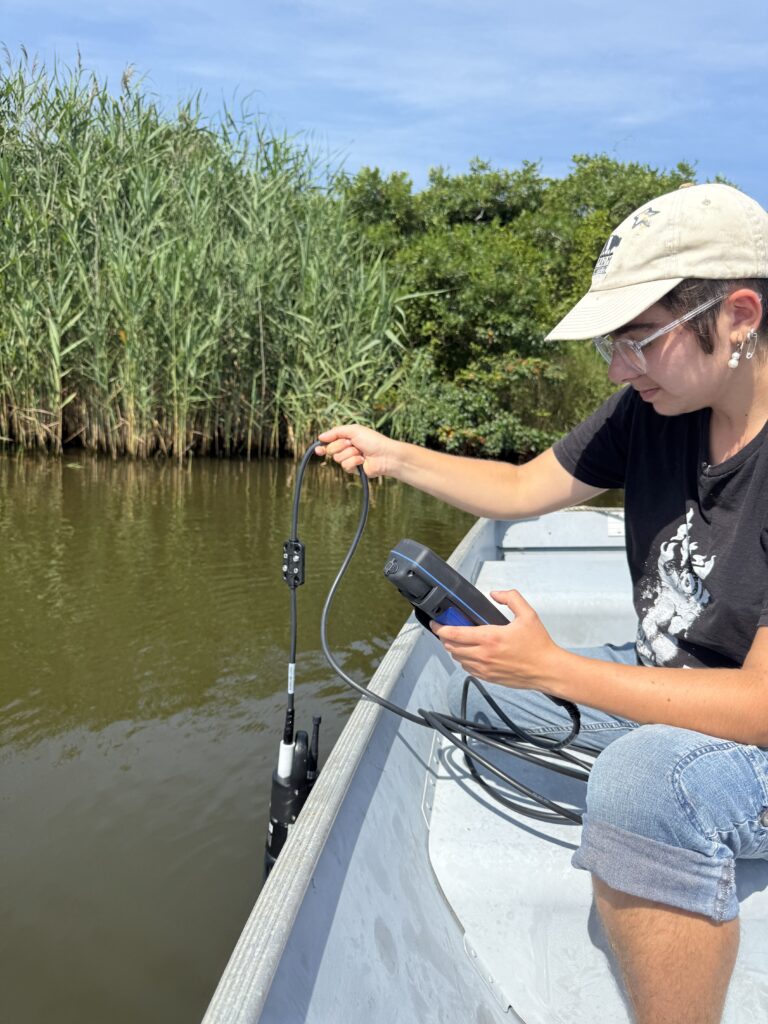
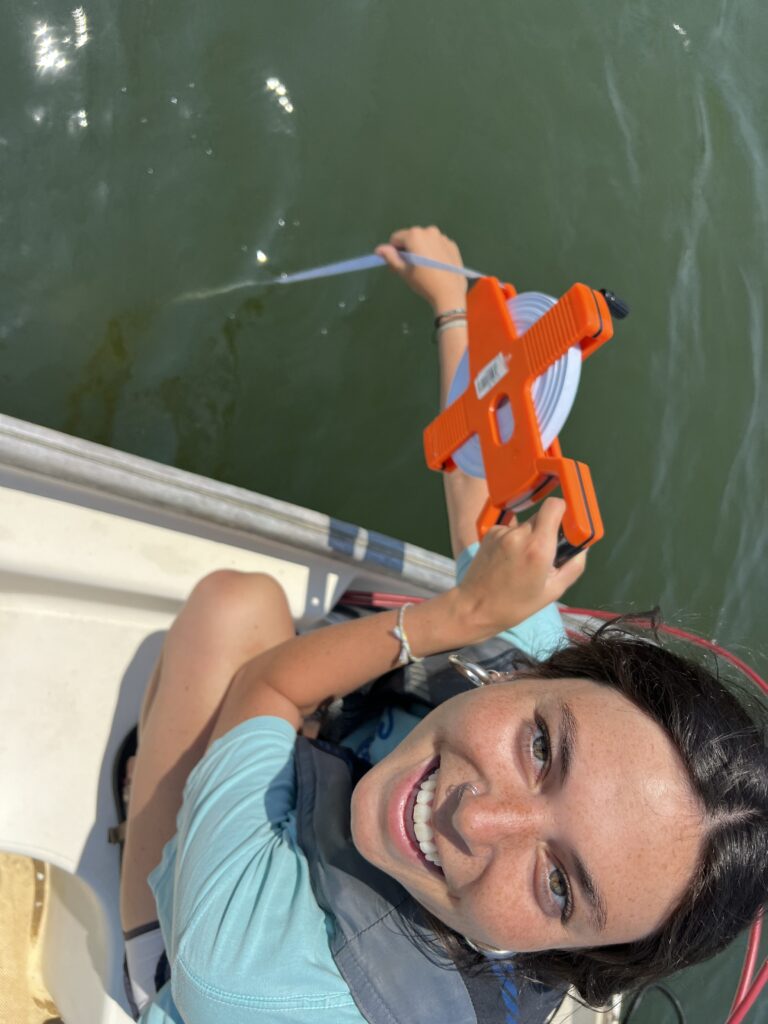
Our science team regularly measures key water quality parameters including dissolved oxygen, temperature, salinity, pH, chlorophyll, turbidity, and water clarity using a handheld probe from YSI called the ProDSS Multiparameter sampling instrument. We also collect water samples to monitor cyanobacteria concentrations as part of the MV CYANO program. Lastly, in partnership with the Marine Biological Laboratory, monthly nutrient samples are taken and analyzed to measure nitrogen and phosphorus levels.
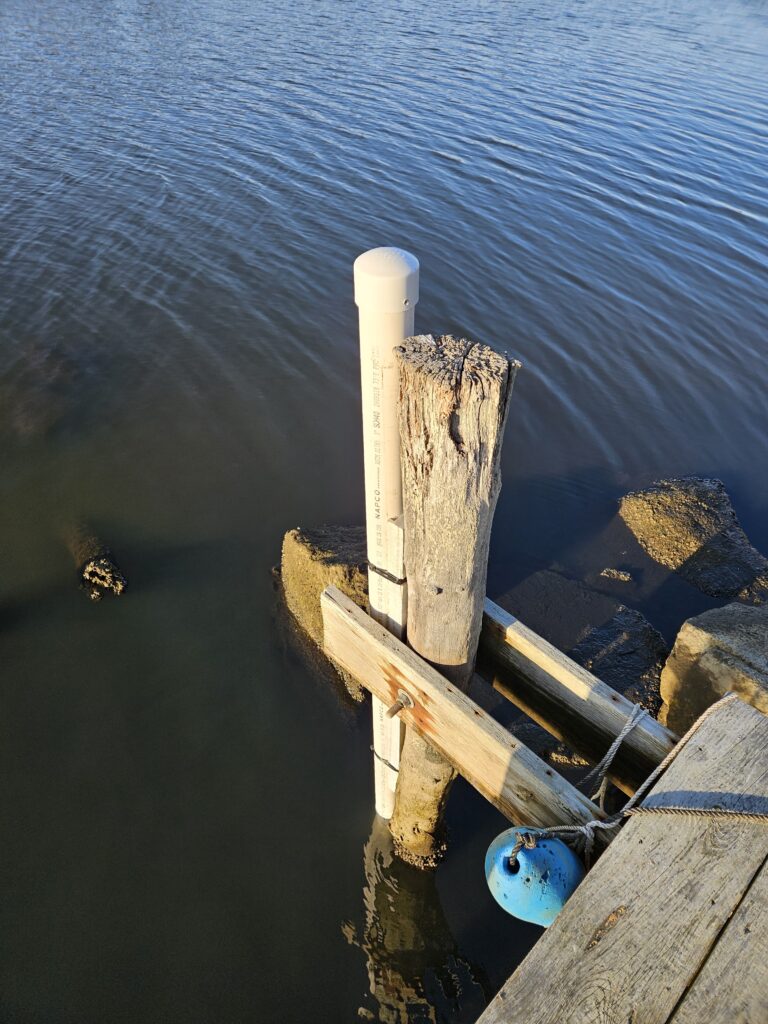
Water level, dissolved oxygen, and conductivity are monitored year-round using deployed data loggers that record continuous measurements every 30 minutes.
Long-term monitoring helps us understand how pond conditions change over time, detect emerging issues, and provide the science needed to protect and restore these valuable coastal ecosystems.
Frequently Asked Questions
What is eutrophication?
Eutrophication is the build up of excess of nutrients in a pond or lake. The presence of these nutrients can stimulate a rapid and extensive growth of phytoplankton. This rapid growth or “bloom” can in turn deplete the oxygen from the water causing local hypoxia (oxygen poor ) or even anoxic (oxygen free) regions. Most plants and animals need oxygen to live, so this depletion of oxygen can be devastating to the ecosystem.
Where do these nutrient come from?
Nitrogen and Phosphorus are the most commonly measured nutrients because of their role in phytoplankton growth. Nitrogen enters a pond system through rainwater, decomposition of biological mater, animal waste, septic sources, or fertilizer. Phosphorus is a component of both fertilizer and detergents. In systems where Nitrogen and Phosphorus are not limiting factors, Silicates can be the limiting nutrient for phytoplankton growth. Most Silica comes from the weathering of rocks.