Eelgrass Ecosystems
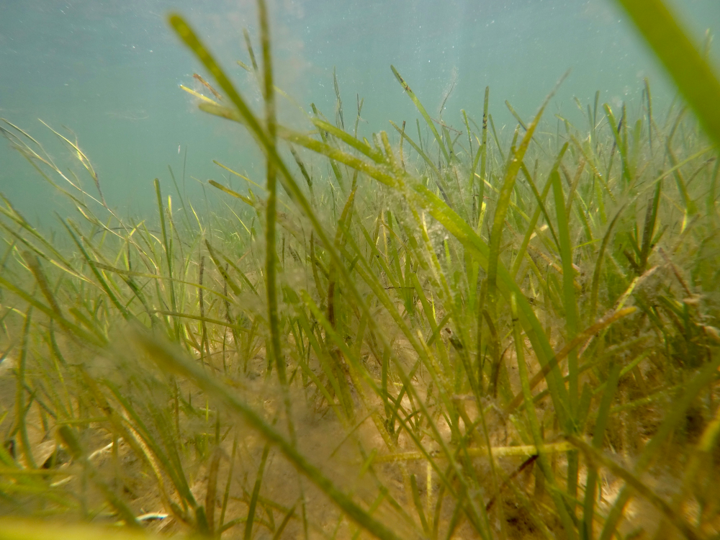
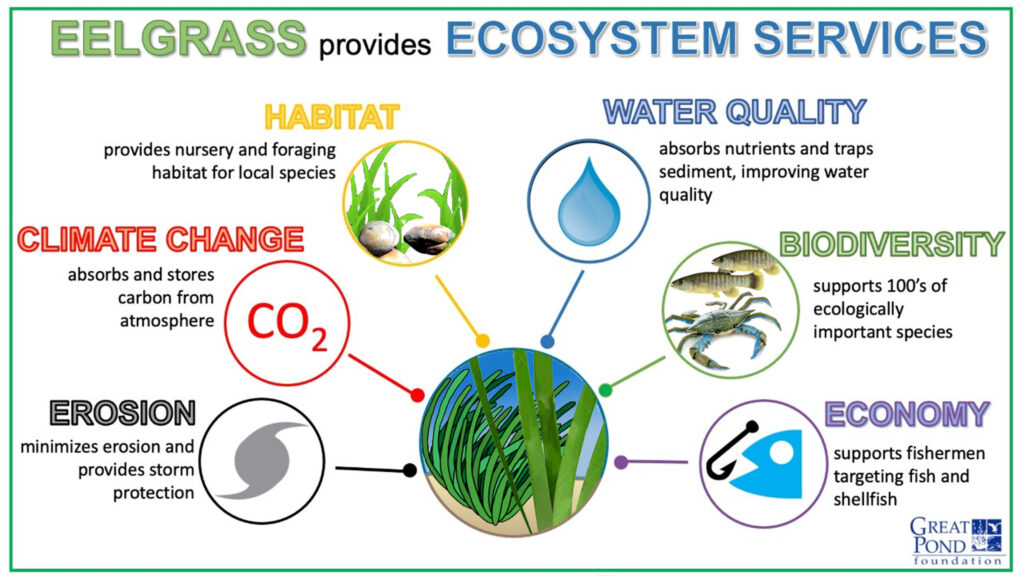
EELGRASS (Zostera marina) is a native seagrass that grows on the sandy bottoms of our local salt ponds and coastal waters. This natural resource provides immense ecological and commercial value by improving the health of our waters both locally and globally. Eelgrass serves as habitat for larval fish, produces oxygen, sequesters carbon, improves water quality, stabilizes shorelines, and is an indicator of the overall health of an estuary.
Improves The Pond Ecosystem
Eelgrass absorbs nutrients and traps sediments helping to improve water clarity. Eelgrass also stabilizes pond bottoms and reduces erosion.
Habitat for Marine Life
Eelgrass serves as a habitat for larvae, fish, shellfish, and countless invertebrates. A single meadow can support an incredibly diverse community.
Stores Carbon
Coastal seagrasses and wetlands remove carbon from the atmosphere and help to combat climate change. BLUE CARBON is the carbon sequestered by coastal marine ecosystems.
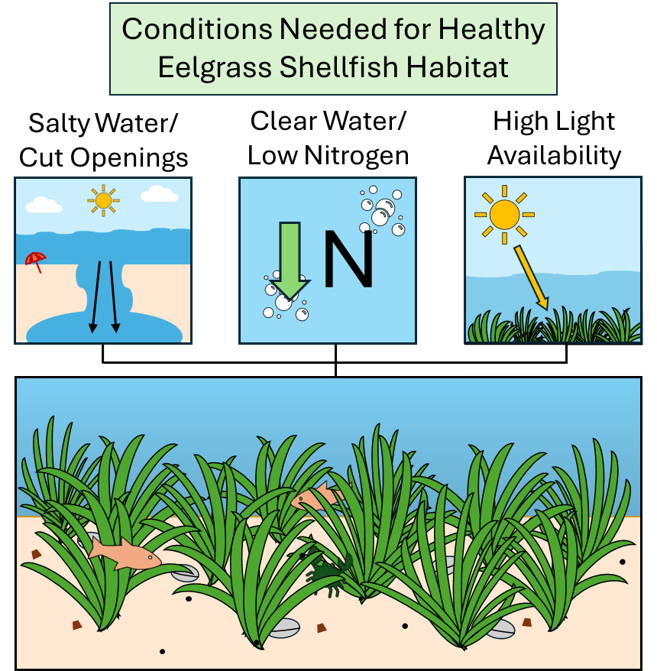
Eelgrass requires clear and clean water conditions that allow sufficient sunlight to reach the bottom. Eelgrass also requires salinity levels to remain in the upper-brackish range, preferably above 15 parts per thousand (ppt). If salinity levels fall below 15 ppt, eelgrass will become stressed, potentially to the point of death.
In General Eelgrass Needs:
- Salty water (at least 15ppt). Periodic pond openings to the ocean can help raise the salinity in the coastal pond.
- Clear water. Low nitrogen levels which limit phytoplankton growth and allow sunlight to reach the bottom.
- High light availability.
Eelgrass in Edgartown Great Pond
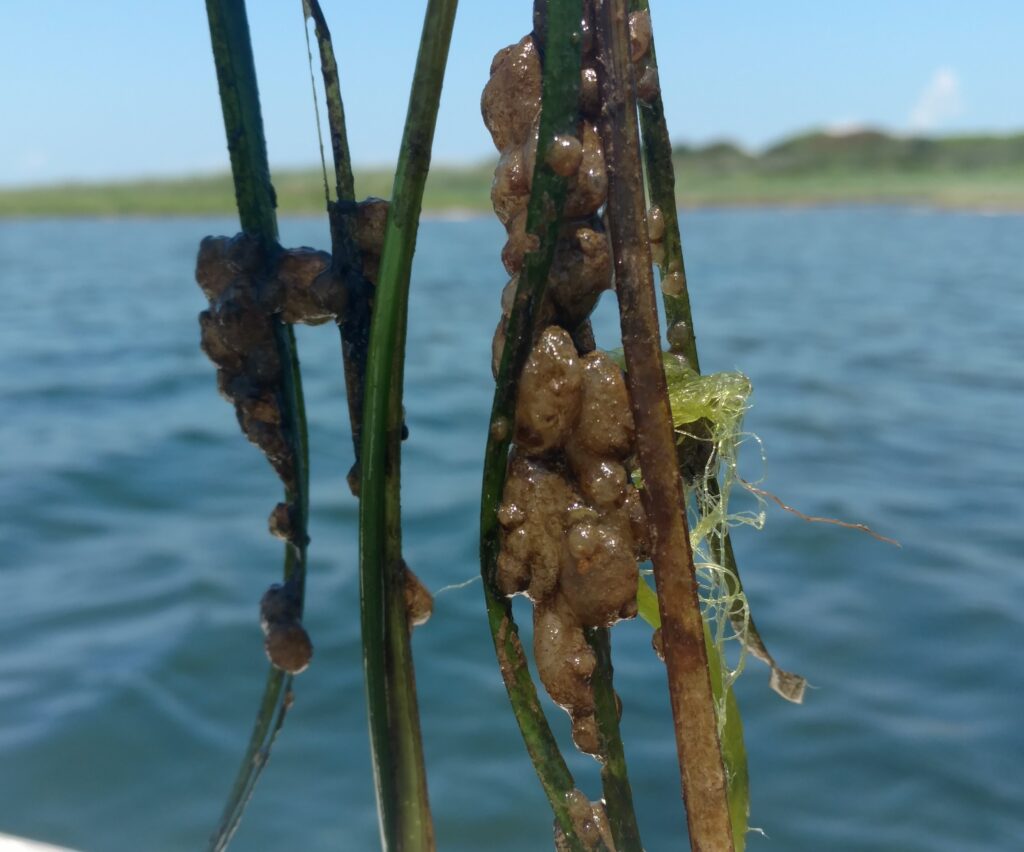
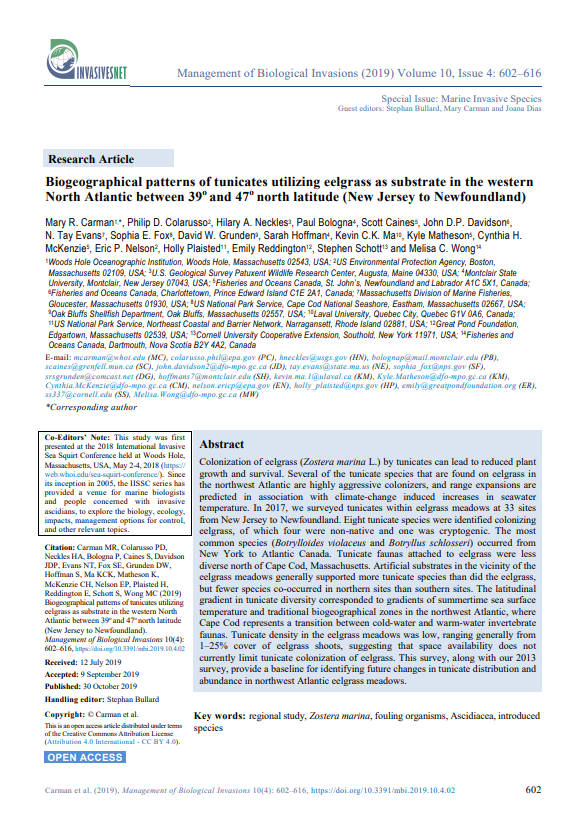
Eelgrass once formed the backbone of a thriving ecosystem in Edgartown Great Pond. In 2019 GPF worked with Woods Hole scientist, Mary Carman, and EPA scientists Phil Colarusso and Eric Nelson studying the distribution, health, and tunicate fouling of eelgrass in Edgartown Great Pond.
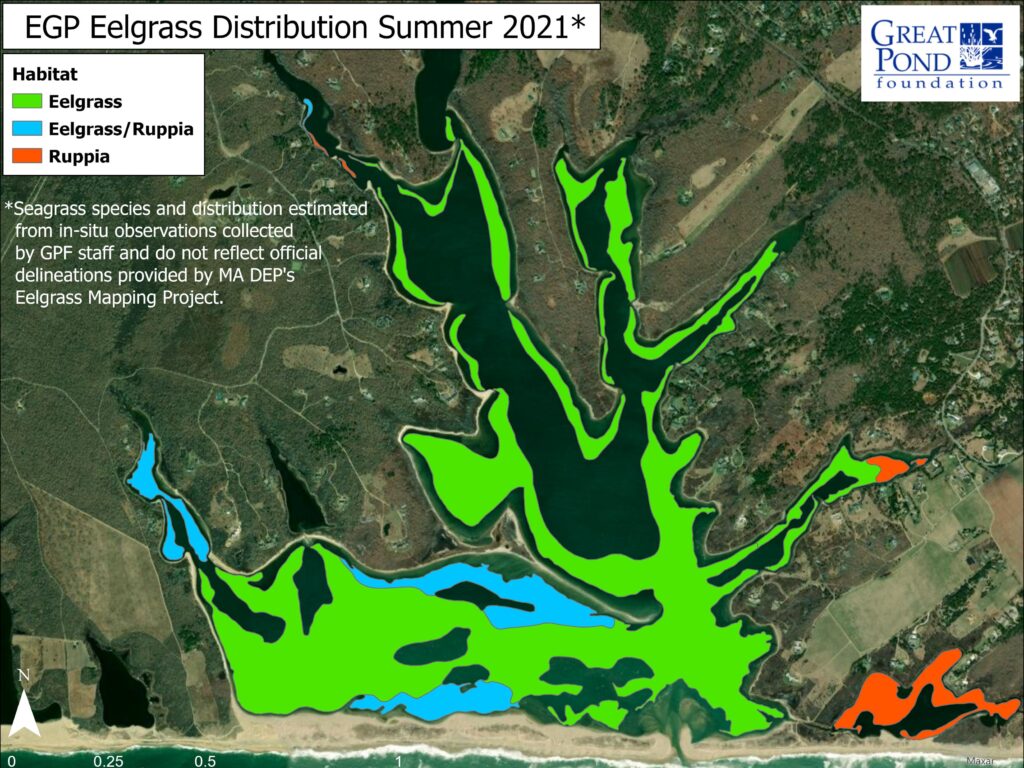
In 2020 and 2021, GPF partnered with Massachusetts Department of Environmental Protection (MA DEP) to validate eelgrass, mapping through aerial surveys, which occur every five years and require on-site verification. Among all south shore ponds surveyed, Edgartown great Pond stood out, boasting hundreds of acres of eelgrass and widgeon grass along its coves and corners.
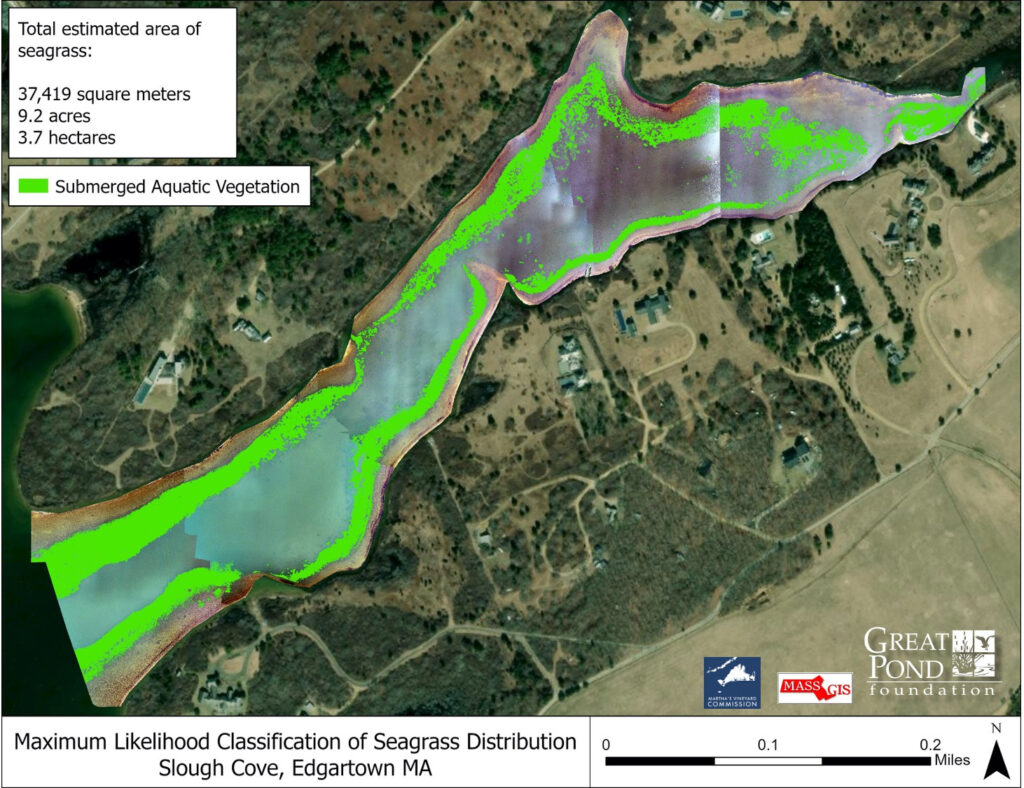
In 2020 GPF also collaborated with the Martha’s Vineyard Commission to map the eelgrass in Slough Cove of Edgartown Great Pond. This work was made possible by a 2020 Edey Foundation Grant.
The Plan of Action:
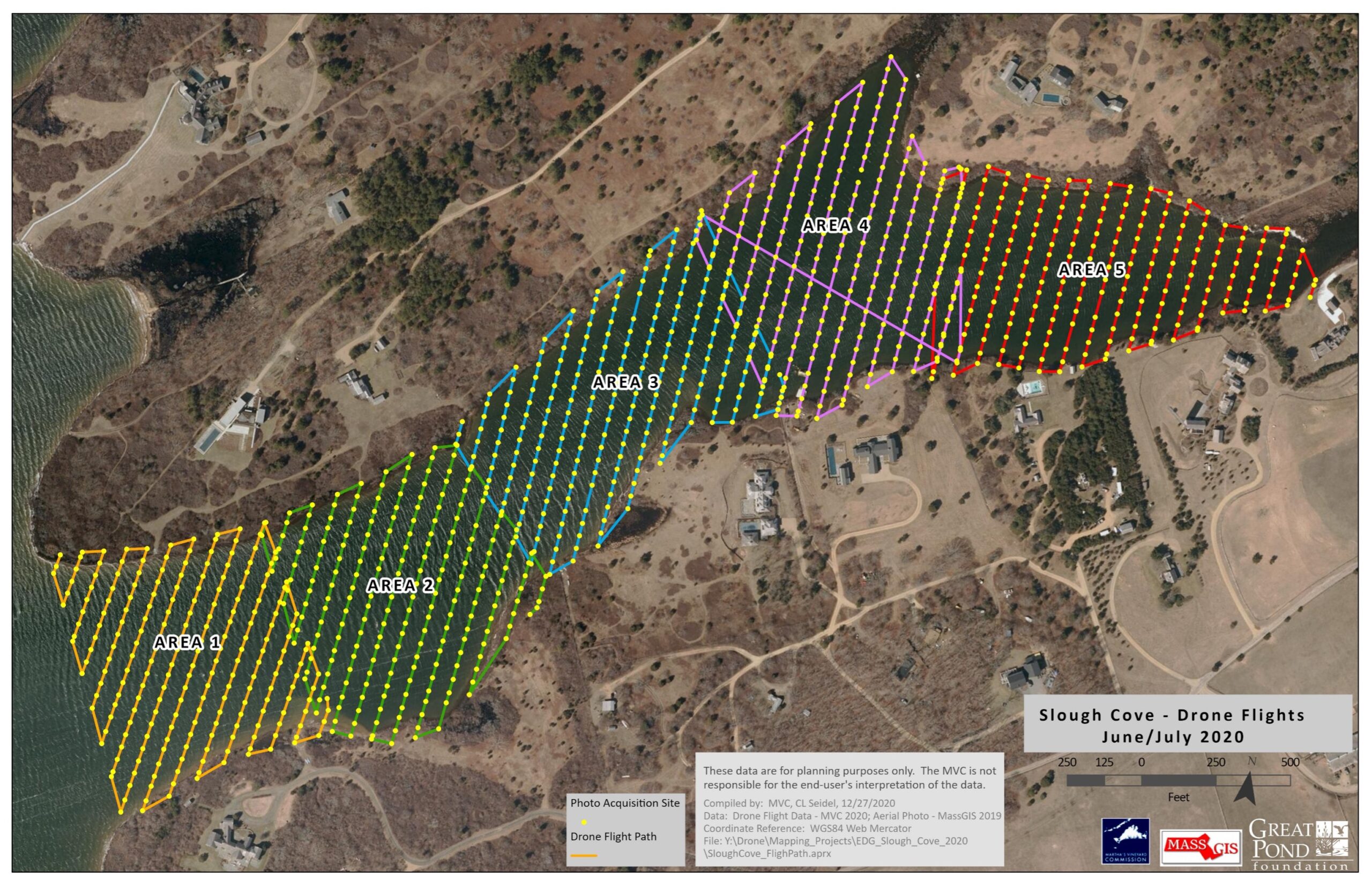
- Map Slough Cove by Drone
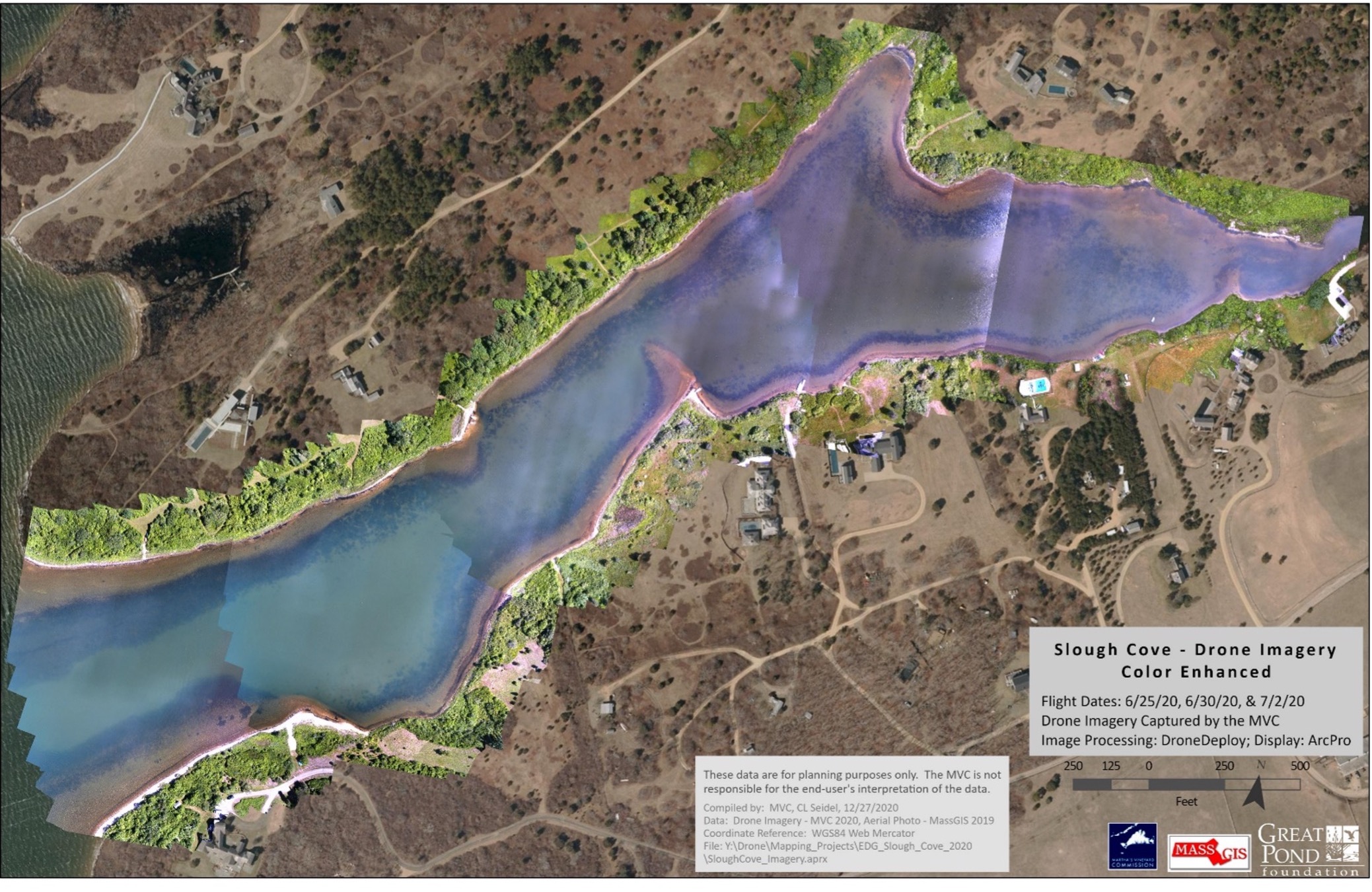
- Make High-Resolution Composite Image
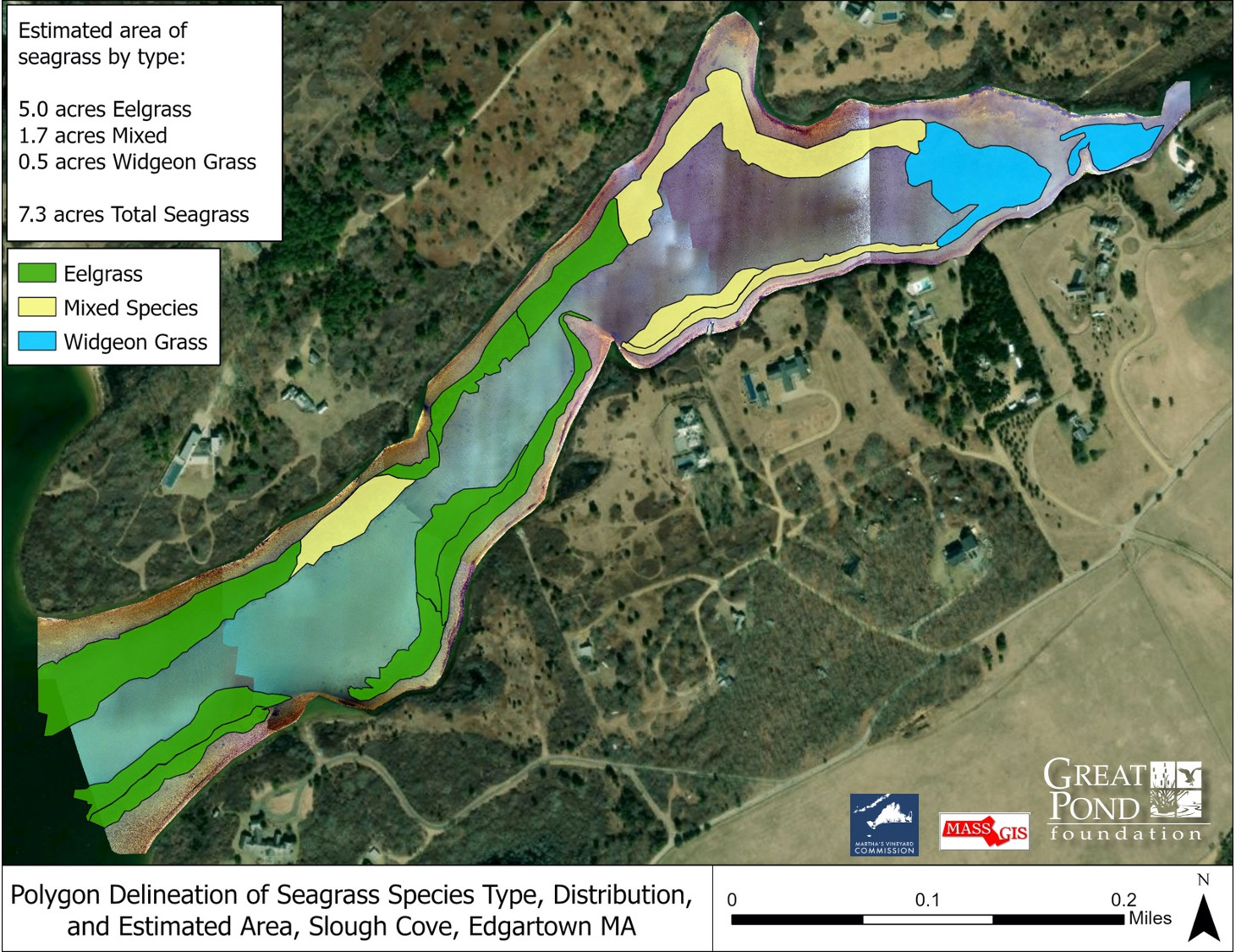
- Delineate Seagrass Meadows
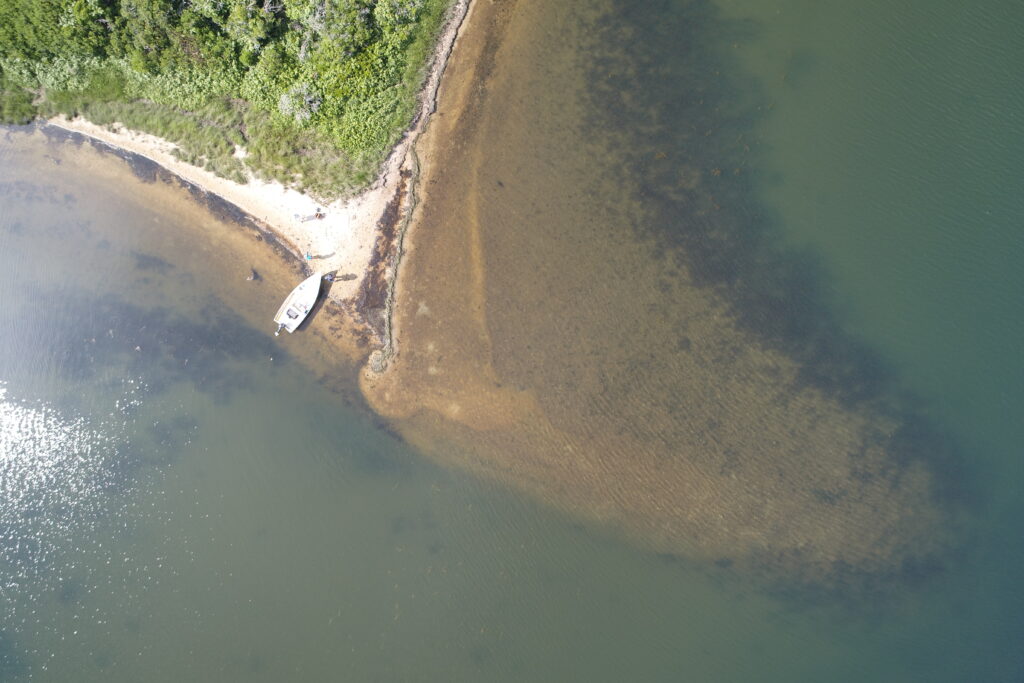
1. Map Slough Cove by Drone
2. Make High Resolution Composite Image
3. Delineate Seagrass Meadows
This once-thriving habitat collapsed abruptly between spring and fall of 2022, eelgrass meadows all but disappeared. Murky waters caused by excess nitrogen, reduced light at the pond bottom, and unusually low salinity from unsuccessful pond openings combined to make survival nearly impossible. Once lush underwater meadows vanished, leaving large stretches of the pond floor barren and threatening the pond’s ecological balance.
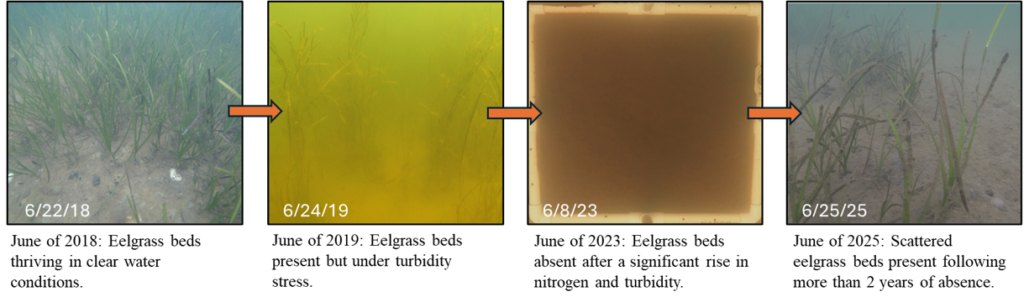
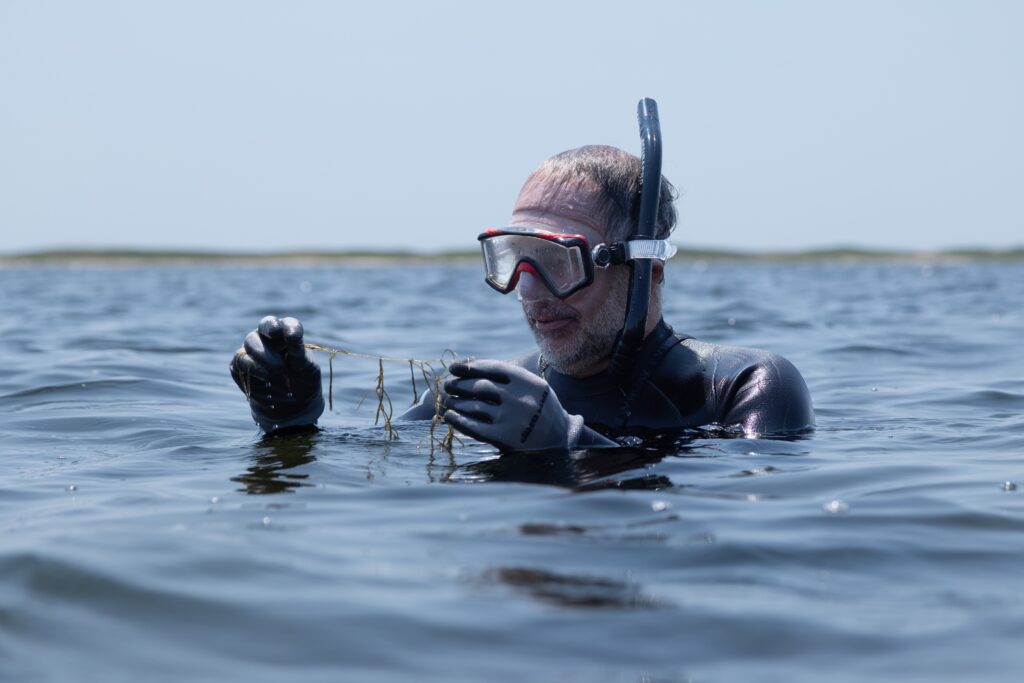
In 2025 there were signs of eelgrass return. Strands of eelgrass in several regions of the pond pulled up with the boat anchor marked the first time since the spring of 2022 that eelgrass was observed. This hinted at the possibility that eelgrass had returned. GPF science team went snorkeling and discovered scattered patches of eelgrass. While eelgrass coverage is still modest compared to historical levels, the presence of these rooted patches represents a meaningful step forward in the pond’s long-term ecological recovery.
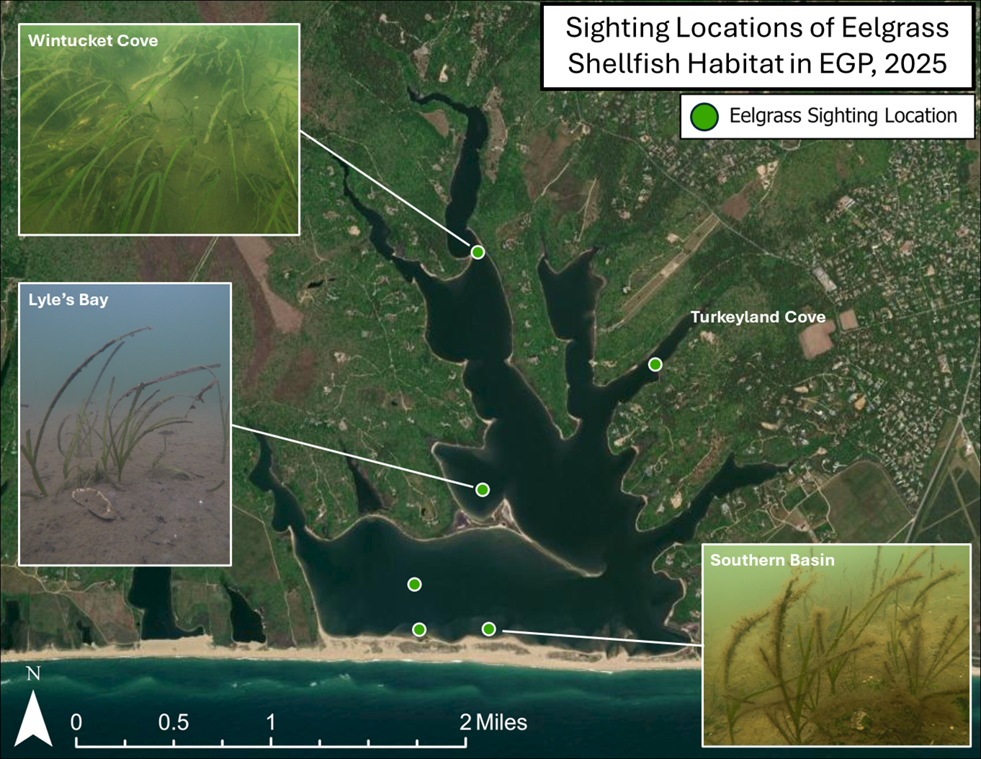
The summer of 2026 brought even more encouraging signs for Edgartown Great Pond. Eelgrass has returned to several regions of the pond and appears noticeably more abundant than it was in 2025. New seagrass patches were visible from the boat and previously observed patches appeared fuller and more established. Later in June, a team member discovered something especially exciting: an eelgrass meadow growing along the shoreline.
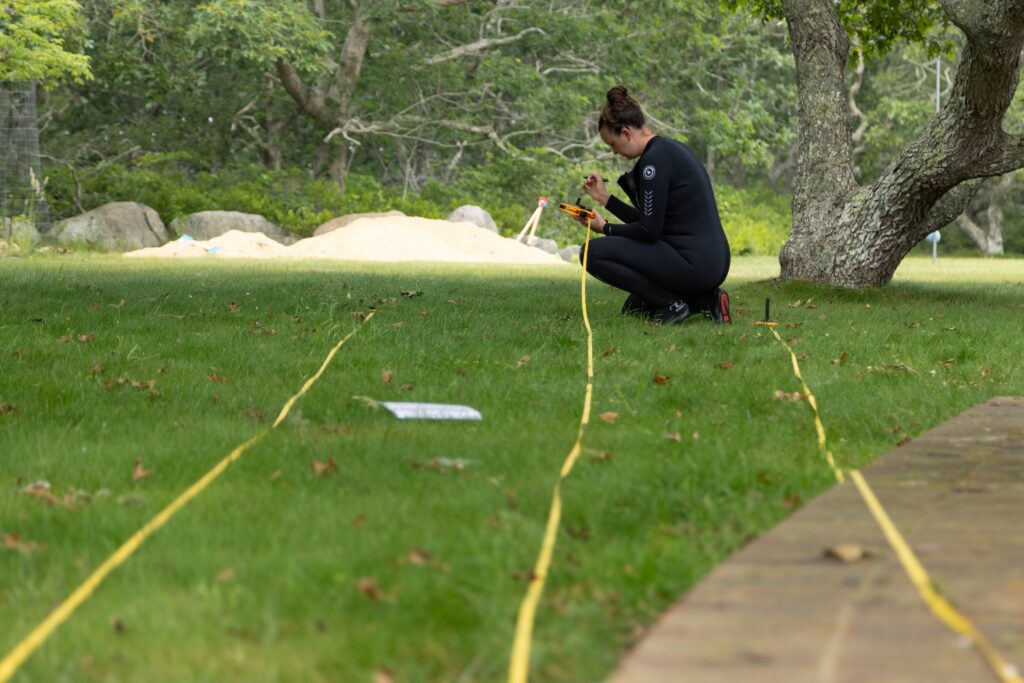
The discovery of this meadow has opened the door to a new monitoring collaboration with SeagrassNet, a global network that tracks seagrass ecosystems using standardized scientific protocols.