Summer Update on Edgartown Great Pond
Water Quality, Water Elevation and Insight into a New Cut Study!
A Summer of Healthy Water Quality
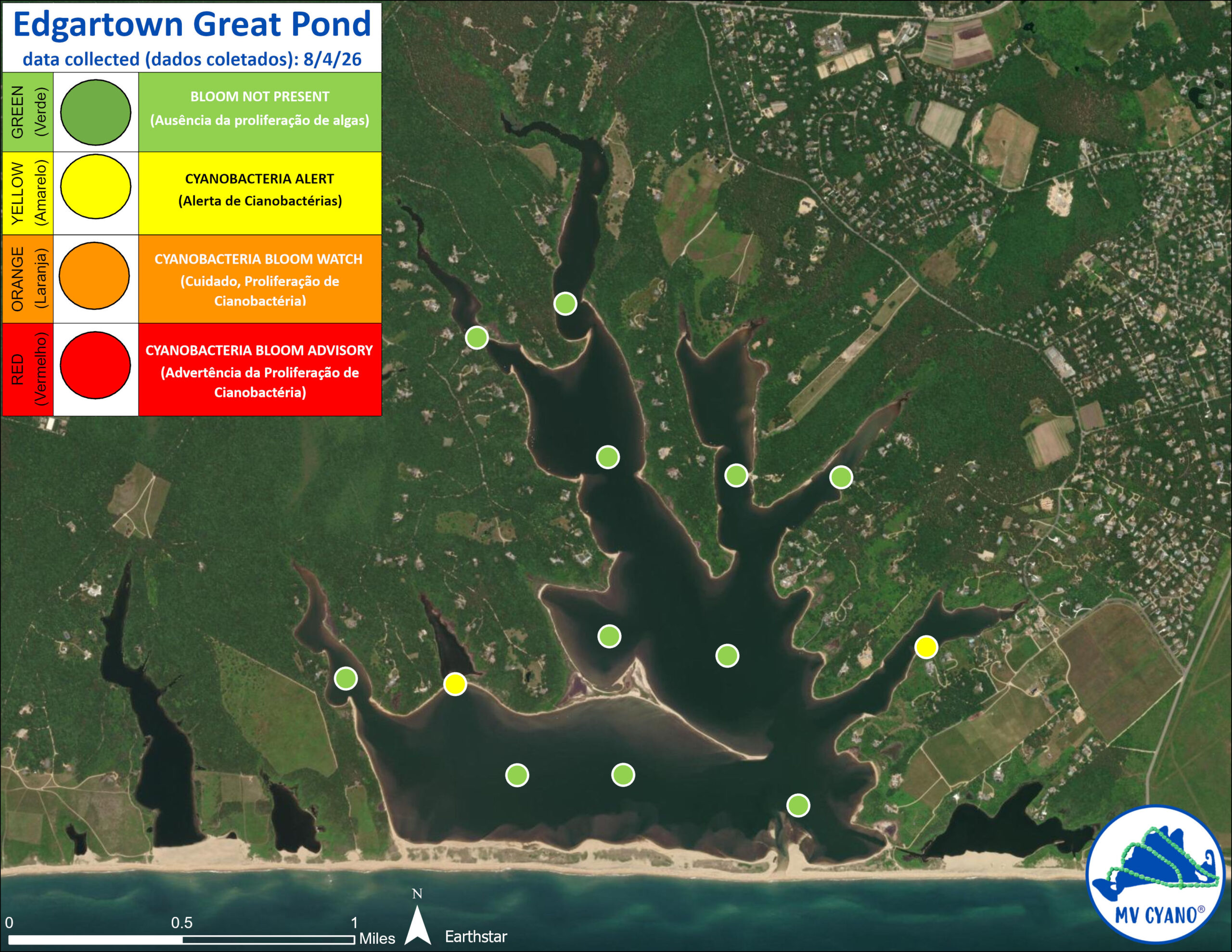
This summer has brought encouraging news for Edgartown Great Pond. Across much of the season, the Pond has remained healthy and resilient, with cyanobacteria levels staying in the green at most monitoring locations (Figure 1). If you follow MV CYANO, you may have already noticed this positive trend in the weekly updates.
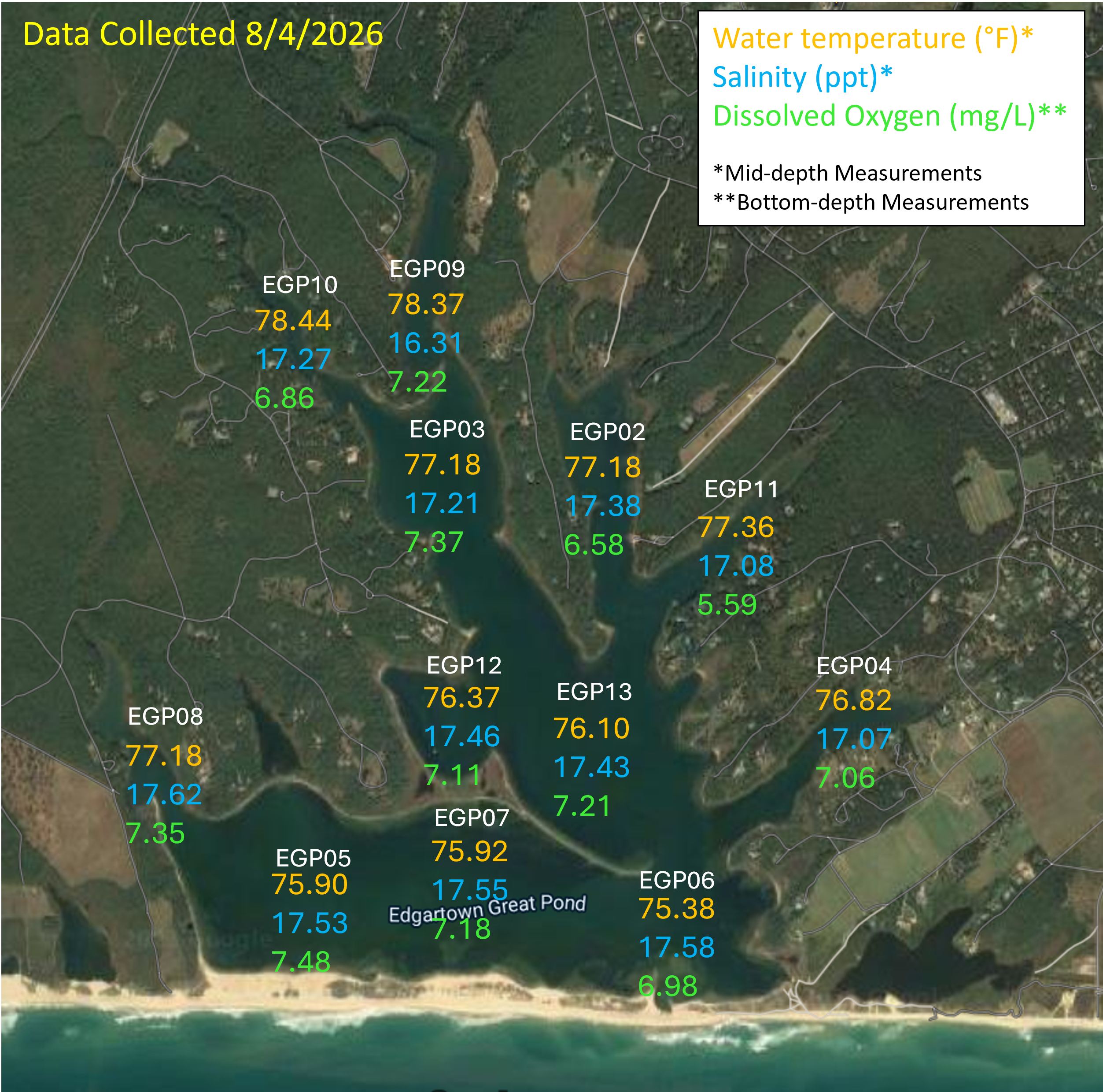
Other water quality measurements tell a similarly promising story. Salinity remains in the mid-brackish range, with all stations above 16 ppt, an important threshold for eelgrass, which needs salinity levels above 15 ppt to survive and thrive. Dissolved oxygen concentrations at the Pond floor are also strong, exceeding the State’s 6 mg/L threshold across most stations (Figure 2). Together, these conditions point to a Pond that is in good shape as we move through the peak of summer.
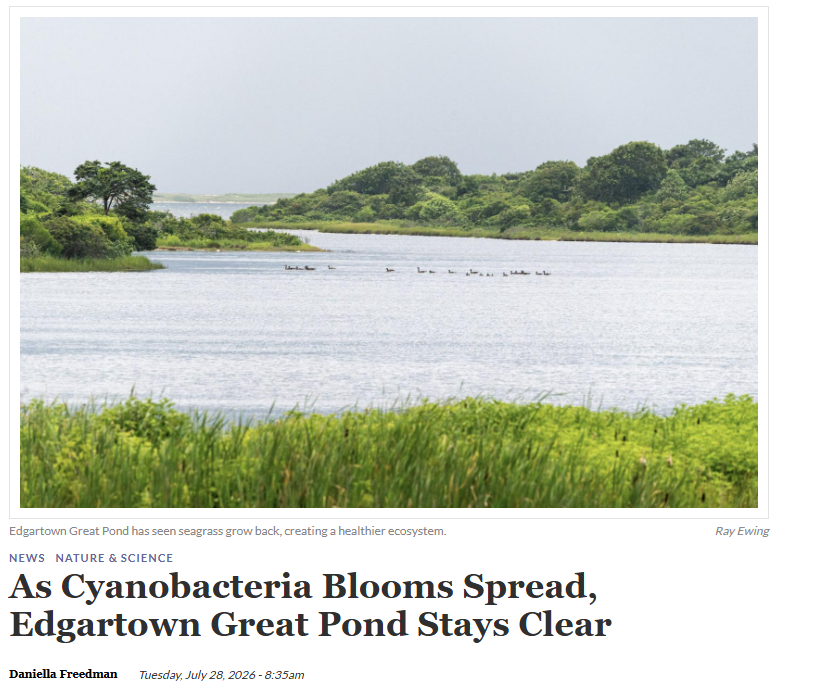
To keep up with weekly cyanobacteria updates, visit our MV CYANO page. You can also read a recent Vineyard Gazette article by Daniella Freedman about why Edgartown Great Pond has maintained consistently low cyanobacteria concentrations this summer. The article is available in “Read the Latest” on our Ponds in the News Page!
Watching the Pond Rise… When is the Next Cut?
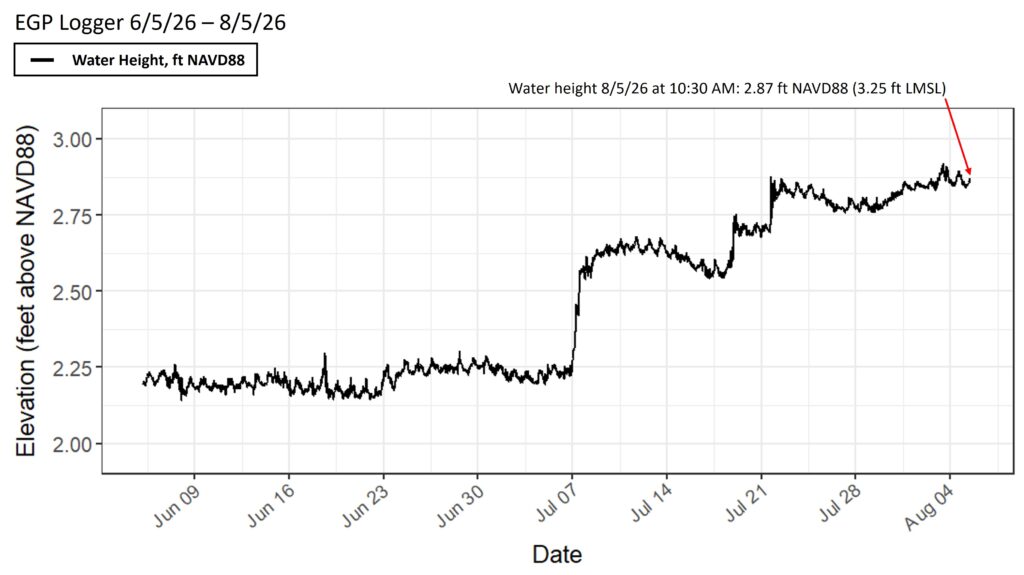
As water quality remains strong, attention is also turning to the Pond’s elevation and the timing of the next Pond cut (opening the Pond to the ocean). Edgartown Great Pond’s current elevation is 3.25 ft LMSL (Figure 3). In recent years, the Edgartown Shellfish Constable has typically opened the Pond when it reaches approximately 3.9 ft LMSL. Based on that pattern, the Pond has about 0.65 ft of elevation rise remaining before it may be cut.
While the exact timing will depend on conditions, our team is closely tracking changes in water level and preparing for the next opening. You can follow the latest elevation and cut-related updates on the EGP Cut Status Page.
New Pond Cut Study
Behind the scenes, our team is getting ready for a major field effort during the next opening of Edgartown Great Pond. In collaboration with the Marine Biological Laboratory in Woods Hole, we will study how nitrogen moves between the Pond and the ocean during the cut.
Why This Study Matters
Each cut is an opportunity to learn more about how Edgartown Great Pond responds when it connects with the ocean. For this study, we will measure the flux of total nitrogen and nitrate between the Pond and the ocean during the opening. These data will help us estimate how much nitrogen is flushed out of the Pond during a cut and better understand the role that openings play in supporting Pond health.
How the Sampling Will Work
PRE-CUT: The study will begin before the cut occurs, when we collect baseline samples across Edgartown Great Pond to assess nitrogen concentrations prior to the opening. These samples will be collected one to two days before the Pond is cut.
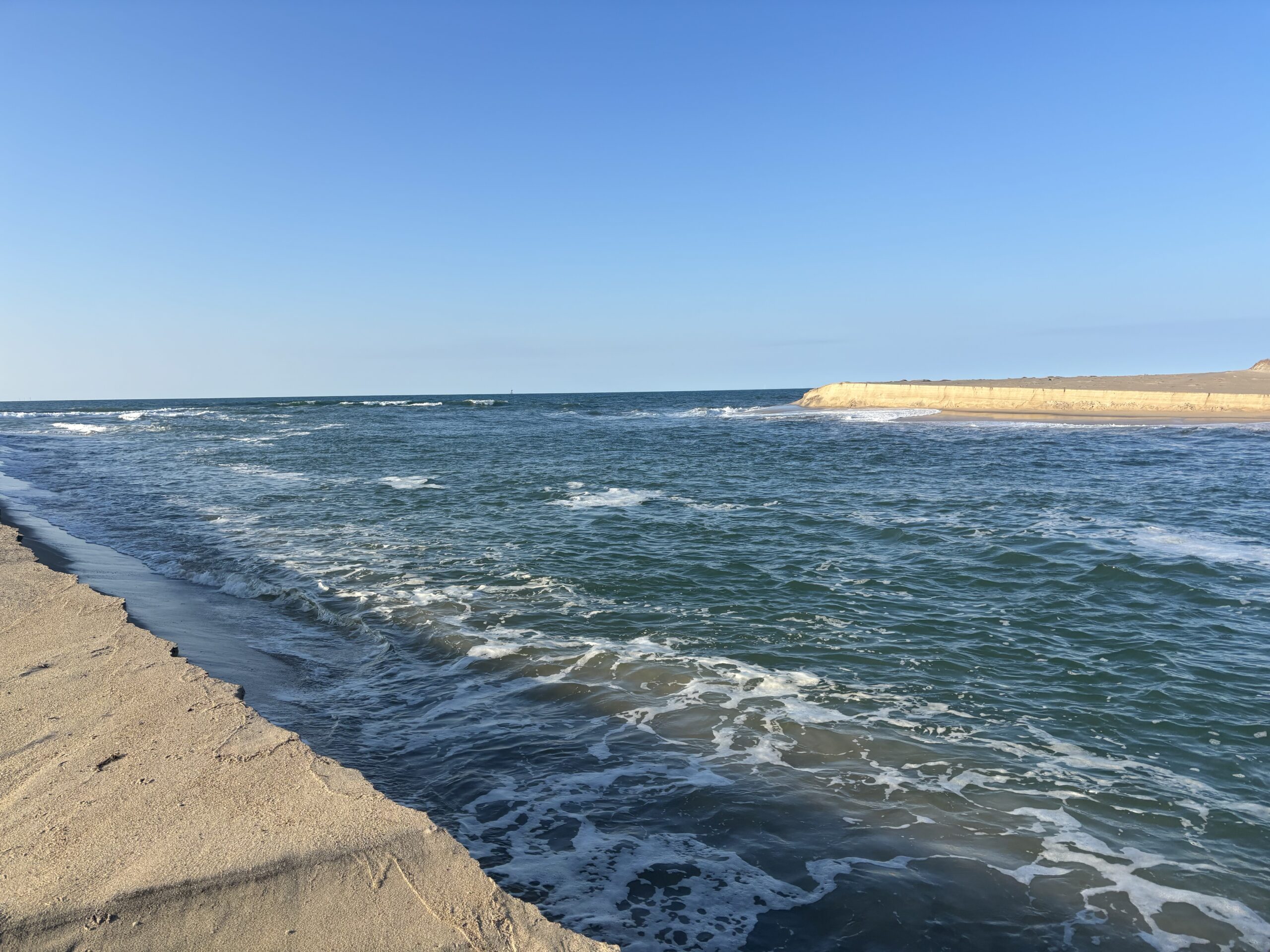
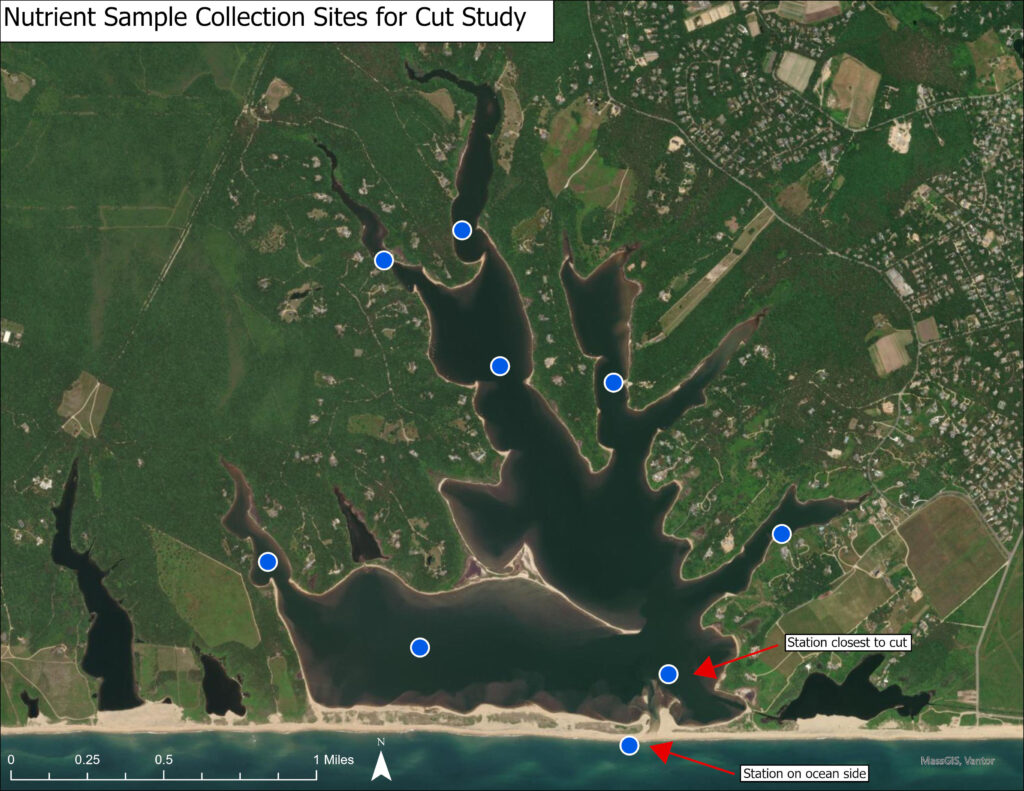
DAY 1 (CUT DAY) & DAY 2: Once the cut begins, the pace of sampling will increase. As the water level drops toward sea level, we will collect samples hourly during daylight hours at the station closest to the cut site (Figure 4). This hourly sampling will continue on the day of the cut and again the following day, giving us a detailed picture of how nitrogen concentrations change during the first stage of flushing.
DAYS 3-5: Beginning on the third day, when the Pond is tidally flushing, we will shift to collecting samples only at both high and low tide. This high- and low-tide sampling will continue for three additional days, helping us capture how nitrogen moves in and out of the system as the connection with the ocean continues.
At the same time, we will collect samples from the ocean west of the cut. Comparing Pond and ocean samples will allow us to better understand how nitrogen concentrations shift on both sides of the opening.
POST-CUT: After the cut closes and water levels stabilize, we will return to the Pond for a final round of sampling using the same approach as the baseline survey. This before-and-after comparison will help us assess the overall change in nitrogen concentrations associated with the opening.
Once the samples are analyzed, we expect to be able to estimate both the rate at which nitrogen flows out of the Pond and the total amount of nitrogen released during the cut. That information will add valuable insight to our understanding of Edgartown Great Pond and the benefits of managed openings.
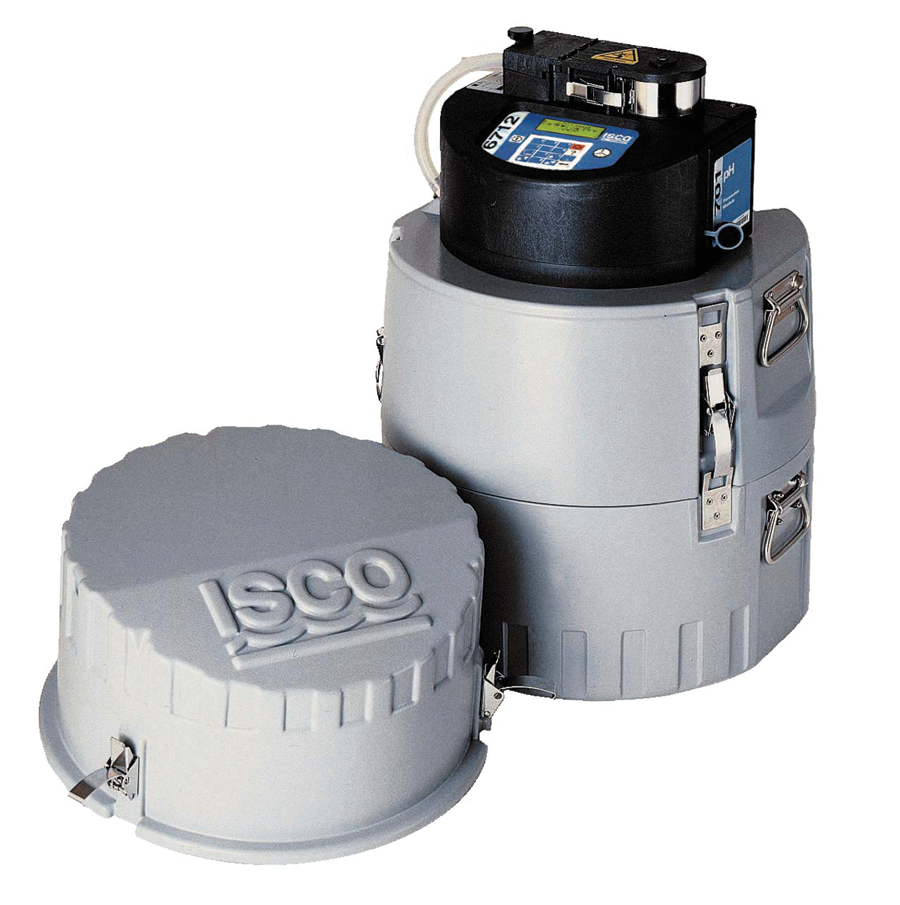
This will be a large effort, and it will take all hands on deck. Fortunately, our team will have some extra help from a new piece of equipment: the ISCO sampler (Figure 5). This programmable sampler can collect water at specific times throughout the day. We will place it near the cut site, where it will gather hourly samples during the first two days of the opening. The sampler will be secured and anchored in a boat, and our team will retrieve the samples at the end of each day.
Check Out Other GPF News:
Scrollable
2026 Summer Highlights
Summer Water Quality Monitoring Stats
Pond-Smart Checklist
2026 Eelgrass Monitoring in EGP
EGP 2026 Summer Update