
On the Hunt for Eelgrass
The Return of Eelgrass in Edgartown Great Pond
History of Eelgrass in Edgartown Great Pond
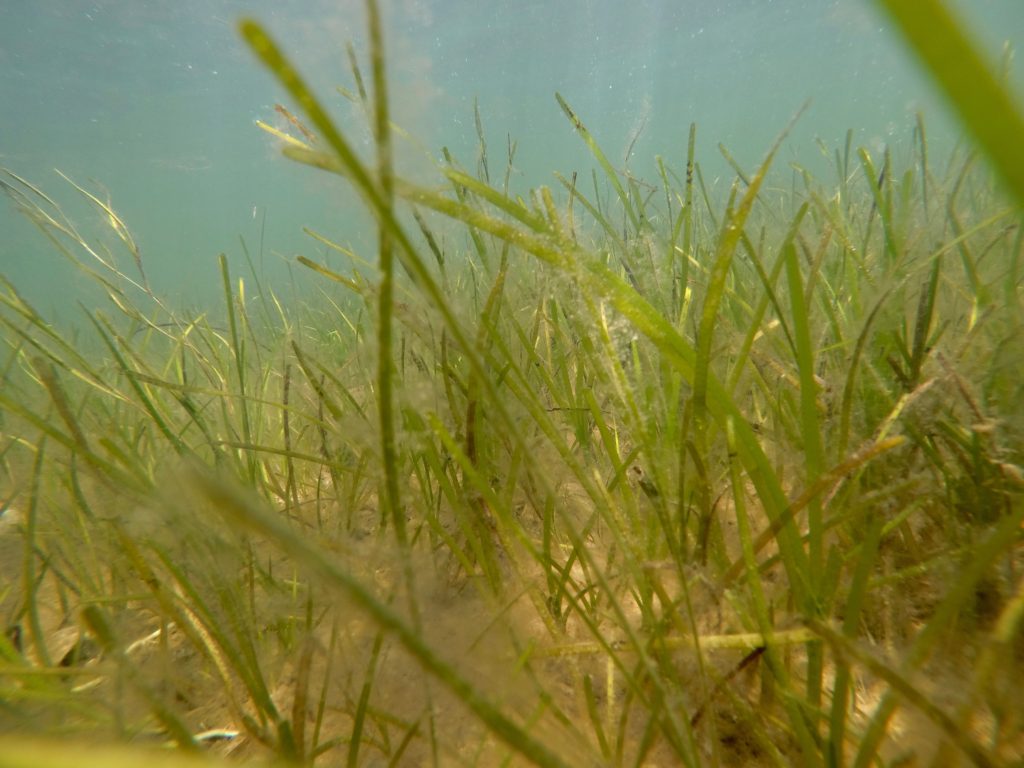
Eelgrass once formed the backbone of a thriving ecosystem in Edgartown Great Pond, sustaining marine life and enhancing water quality.
In 2020 and 2021, GPF partnered with the Massachusetts Department of Environmental Protection (MA DEP) to validate eelgrass mapping through aerial surveys, which occur every five years and require on-site verification. Among all south shore ponds surveyed, Edgartown Great Pond stood out, boasting hundreds of acres of eelgrass and widgeon grass along its coves and corners.
This once-thriving habitat collapsed abruptly. Between spring and fall of 2022, eelgrass meadows all but disappeared. Murky waters caused by excess nitrogen, reduced light at the pond bottom, and unusually low salinity from unsuccessful pond openings combined to make survival nearly impossible. Once lush underwater meadows vanished, leaving large stretches of the pond floor barren and threatening the pond’s ecological balance.
2025 Field Season Findings
This year, our field team set out on a hunt to search for eelgrass within Edgartown Great Pond.
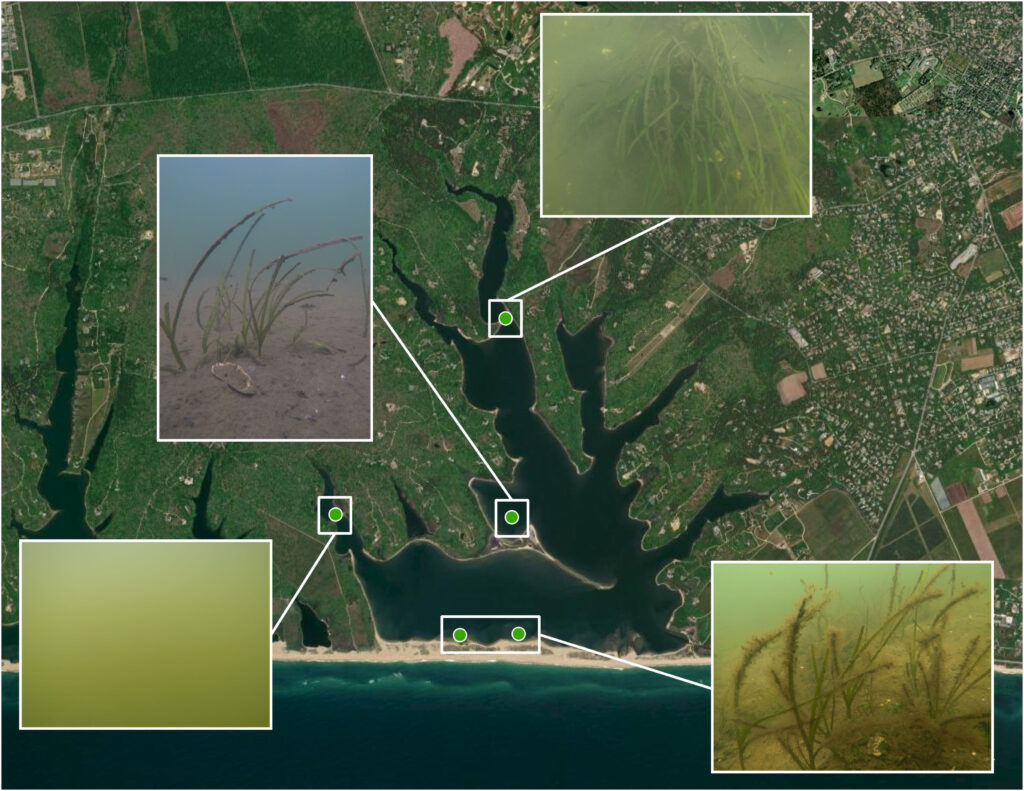
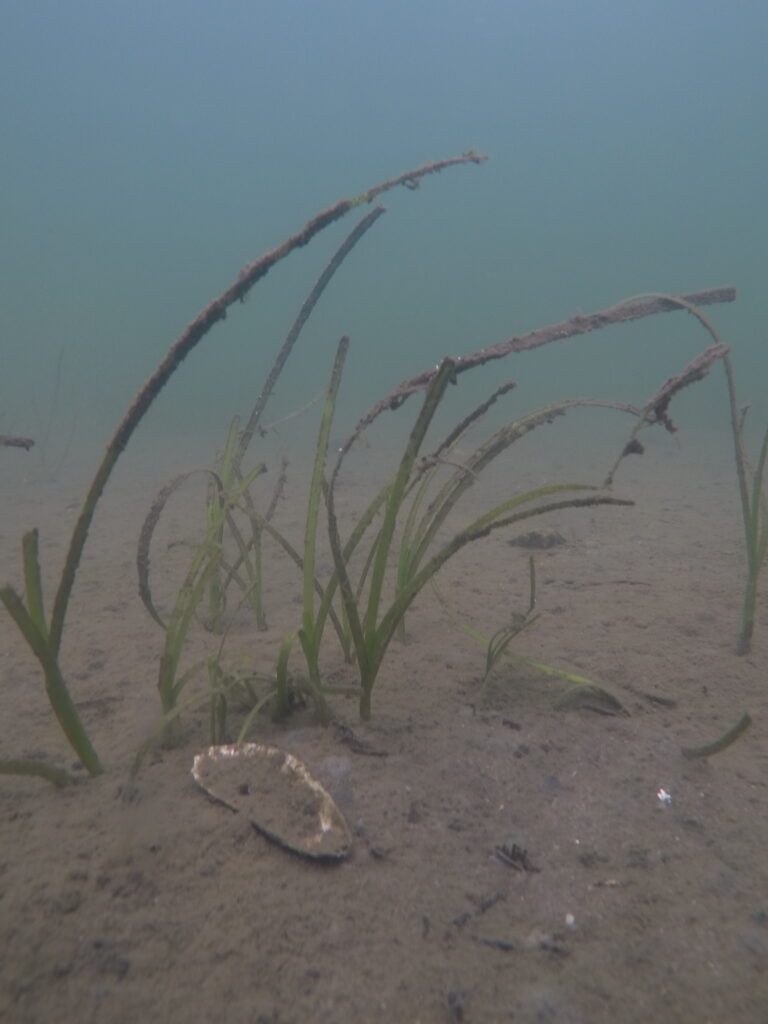
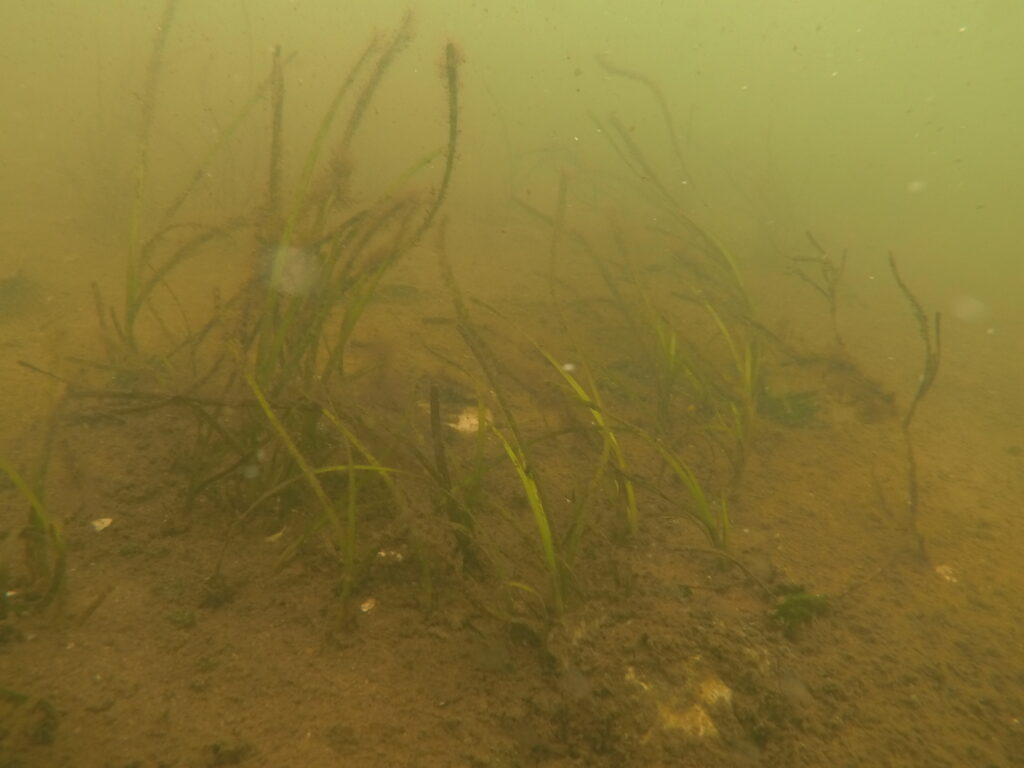
In June of 2025, we were encouraged by small signs of life. Strands of eelgrass in several regions of the pond pulled up with the boat anchor marked the first time since the spring of 2022 that eelgrass was observed. This hinted at the possibility that eelgrass had returned.
Our team went snorkeling in the areas that eelgrass had been pulled up. In these areas we observed scattered patches of eelgrass. While eelgrass coverage is still modest compared to historical levels, the presence of these rooted patches represents a meaningful step forward in the pond’s long-term ecological recovery.
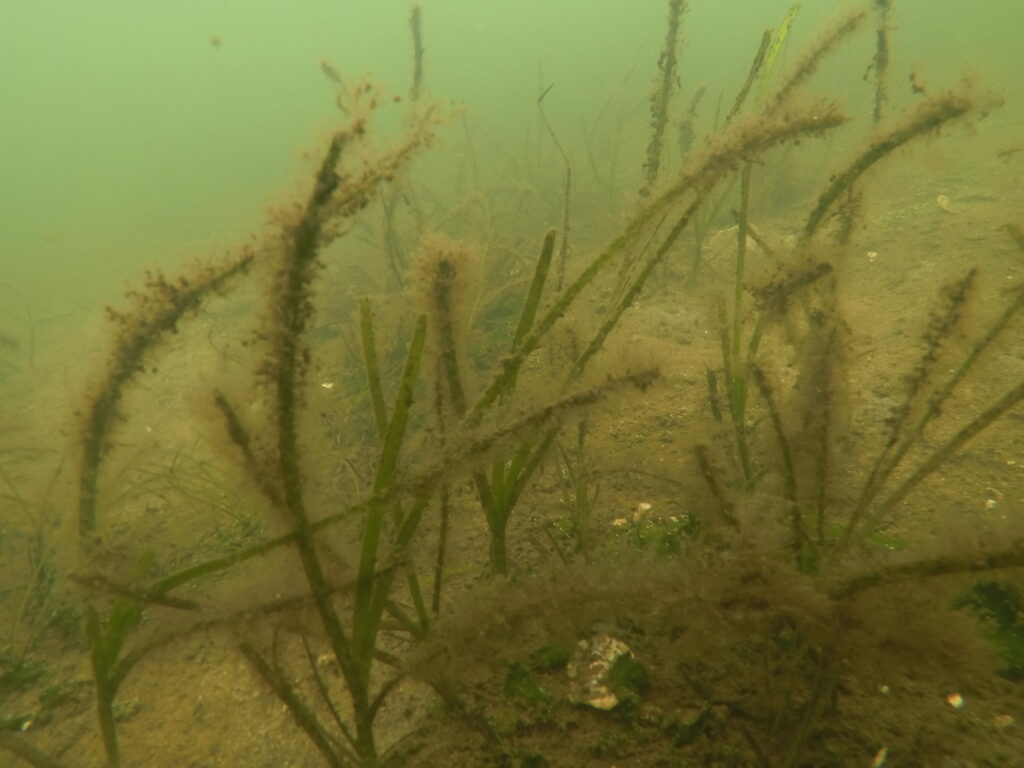
Importance of Eelgrass
Improves The Pond Ecosystem
Eelgrass absorbs nutrients and traps sediments helping to improve water clarity. Eelgrass also stabilizes pond bottoms and reduces erosion.
Habitat for Marine Life
Eelgrass serves as a habitat for larval, fish, shellfish, and countless invertebrates. A single meadow can support an incredibly diverse community.
Stores Carbon
Coastal seagrasses and wetlands remove carbon from the atmosphere and help to combat climate change. BLUE CARBON is the carbon sequestered by coastal marine ecosystems.
What’s Next?
The observations from this field season give us hope that eelgrass is re-establishing in Edgartown Great Pond. Continued monitoring will be essential to understand whether these patches expand, persist, or fluctuate in response to environmental conditions.
Next field season we hope to:
- Explore other areas of the pond to get full extent of eelgrass
- Continue observing and mapping the known eelgrass areas
- Explore other restoration and monitoring strategies
These findings mark a hopeful chapter in the ongoing eelgrass restoration in Edgartown Great Pond.